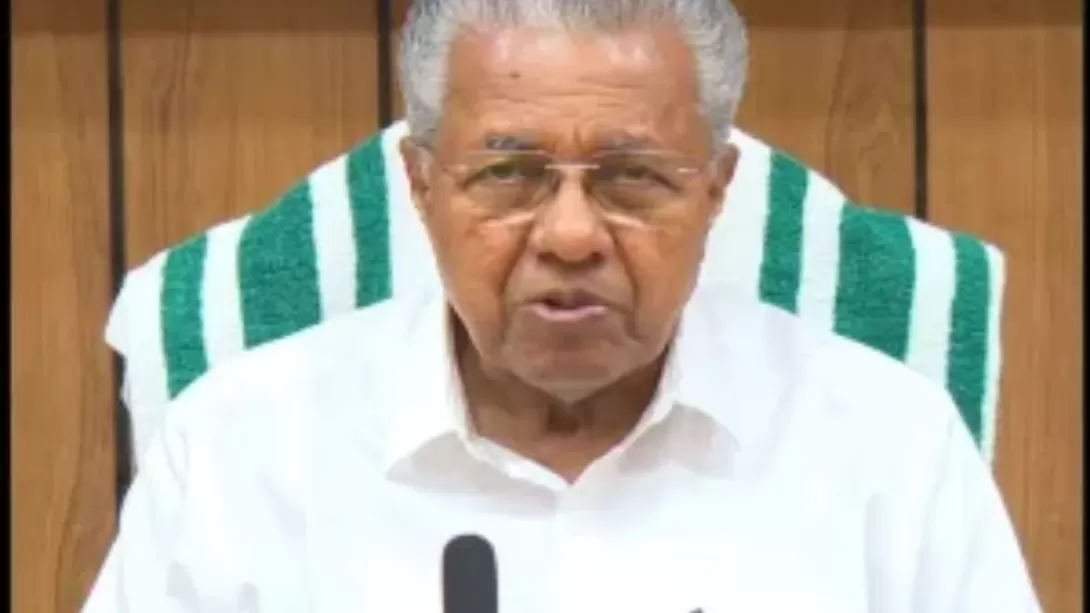
Kerala Chief Minister Pinarayi Vijayan reaffirmed his administration’s commitment to advancing the ambitious SilverLine railway project despite facing political opposition from the central government and various parties. The proposed 529.45-kilometer semi-high-speed rail corridor aims to drastically cut travel time between Thiruvananthapuram and Kasaragod, reshaping the state’s transport landscape. Though the project is currently shelved due to lack of approval from New Delhi, Vijayan emphasized that the initiative will eventually materialize. Highlighting political motivations behind the central government’s refusal, the Chief Minister expressed optimism that Kerala’s railway modernization will proceed “if not today, then tomorrow.”
Political Challenges Surrounding SilverLine
Kerala’s SilverLine project, envisioned as a transformative semi-high-speed rail corridor, has encountered significant political resistance, particularly from the central government and opposition factions. Chief Minister Pinarayi Vijayan publicly accused the Union administration of aligning with parties opposing the initiative for political gains rather than technical or developmental reasons. Speaking during his government’s fourth anniversary press briefing, Vijayan lamented the absence of necessary permissions despite proactive engagement with the Union Railway Ministry.
The refusal of approval stands in stark contrast to the Government of India’s stated ambition to propel national progress through infrastructure projects. Vijayan characterized the current impasse as an unfortunate divergence from this broader narrative, underscoring the political complexities that often hinder infrastructural development in India’s federal framework.
The SilverLine Project: Scope and Potential Impact
The SilverLine rail corridor proposes to connect the southern capital Thiruvananthapuram with Kasaragod in the north, spanning approximately 529.45 kilometers. Designed as a semi-high-speed line, it promises to cut down the current travel duration drastically—from nearly 12 hours to under four hours—thereby revolutionizing intra-state connectivity.
This infrastructure is poised to catalyze economic activity, enhance mobility, and integrate Kerala’s diverse regions more tightly. By slashing travel times and improving logistical efficiency, the project could boost tourism, facilitate trade, and contribute to sustainable regional development.
Engagement with Experts and Governmental Agencies
Vijayan highlighted that the state government had sought expert opinions to refine the project proposal. Notably, ‘Metroman’ E Sreedharan, an acclaimed figure in India’s railway modernization, contributed suggestions that found considerable consensus. Despite these efforts, sustained dialogue with the central government has failed to yield the required clearances.
The Chief Minister also referenced interventions made through senior representatives, including the special envoy K V Thomas in New Delhi, aimed at breaking the deadlock. Yet, as of now, responses remain elusive, leaving the project in a state of limbo.
The Road Ahead: Persistence Amidst Opposition
While acknowledging the present challenges, Vijayan’s message was resolutely optimistic. He urged stakeholders and the public to view the current delays as temporary, asserting the inevitability of Kerala’s railway development. His insistence that “if not today, then tomorrow” signals a firm political resolve to pursue the SilverLine project despite setbacks.
This stance highlights the broader tensions between state aspirations and central oversight in India’s federal governance system, especially when political rivalries intersect with infrastructure policymaking. The eventual realization of SilverLine will depend on navigating these complexities, forging consensus, and aligning regional priorities with national frameworks.
Conclusion
Kerala’s SilverLine project encapsulates both the promise and the challenges of large-scale infrastructure development within India’s politically pluralistic environment. As Chief Minister Pinarayi Vijayan’s administration persists in its pursuit of modernizing the state’s rail connectivity, the ultimate success of SilverLine will hinge not only on technical feasibility but on overcoming entrenched political resistance.
For now, the vision remains alive—an emblem of Kerala’s aspiration for progress and a testament to the enduring interplay between politics and development in India’s federal landscape.
Comments