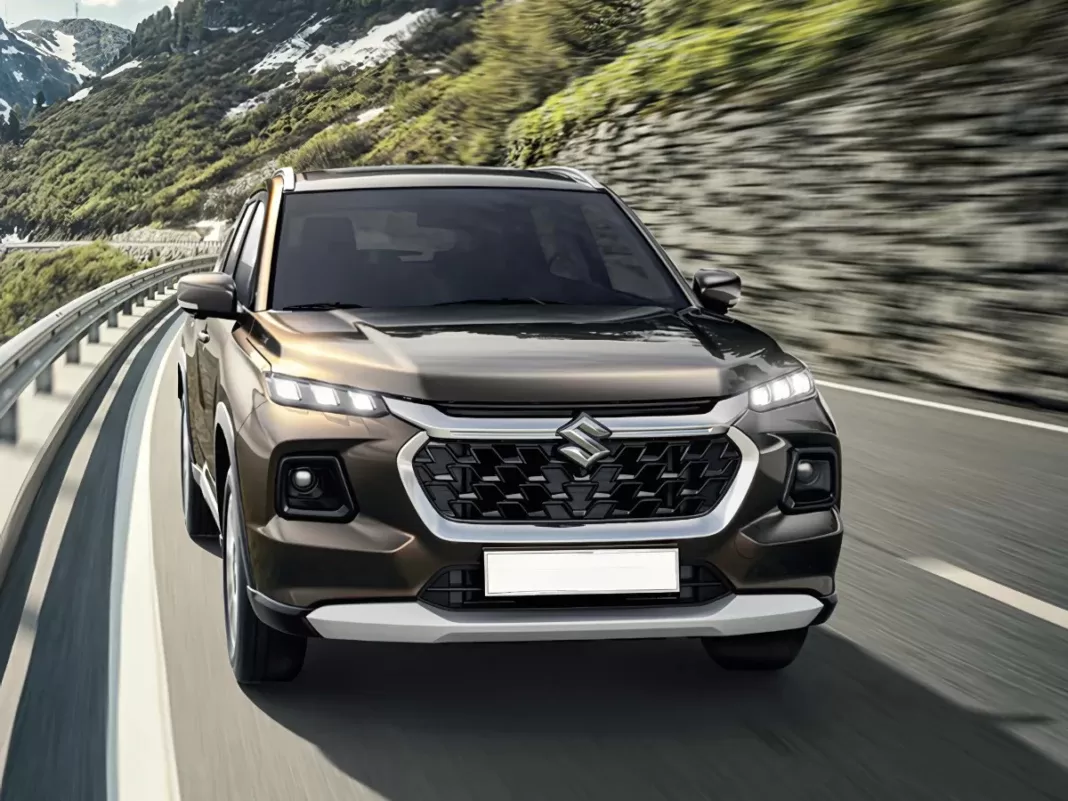
As India accelerates toward a cleaner automotive future, industry giants Maruti Suzuki and Toyota are preparing to launch a series of electric and hybrid vehicles tailored for the domestic market. Slated for release later in 2025, these new offerings include fully electric SUVs like the Maruti e-Vitara and Toyota’s Urban Cruiser EV, alongside hybrid expansions of the Fortuner and Grand Vitara lineups. The companies' collaboration reflects a strategic push to diversify powertrains, address evolving regulatory norms, and respond to rising consumer demand for sustainable mobility—all while leveraging shared platforms and manufacturing synergies.
Electrification Gains Traction: Maruti and Toyota’s First EVs
India’s transition to electric mobility receives a significant boost this year as both Maruti Suzuki and Toyota gear up to debut their first all-electric vehicles. The Maruti e-Vitara, originally showcased at the 2025 Bharat Mobility Global Expo, is scheduled for a domestic launch by September 2025, according to MSIL Chairman R.C. Bhargava. The SUV, however, will prioritize exports initially due to unresolved battery supply and software integration challenges.
The e-Vitara will be offered with two battery pack options—49 kWh and 61 kWh—targeting a range upwards of 500 kilometers on a full charge with the larger variant. These specifications aim to place it competitively in the nascent but fast-growing Indian EV segment.
Toyota Urban Cruiser EV: Sharing Tech, Expanding Reach
Toyota’s counterpart to the e-Vitara—the Urban Cruiser EV—shares the same electric drivetrain and battery configurations. While shown as a concept at the 2025 Expo, a production-ready model has been revealed in select international markets. Toyota is expected to roll out the Urban Cruiser EV in India by December 2025, roughly three months after Maruti’s version.
This shared electric platform underlines the strength of the Maruti-Toyota global alliance, allowing for cost optimization, rapid market entry, and reduced development timelines across both brands.
A New Chapter for Family SUVs: 7-Seater Hybrid Expansion
In response to India’s growing demand for spacious, family-oriented vehicles, Maruti is preparing to launch a new 7-seater SUV, based on the popular Grand Vitara. Spotted multiple times in camouflage during test runs, the upcoming model will be assembled at the Kharkhoda plant in Haryana and will be launched by year-end 2025.
This extended SUV will be marginally longer to accommodate a third row of seats while retaining most features from the standard Grand Vitara. Buyers will have a choice between a mild-hybrid and a strong-hybrid variant, enhancing fuel efficiency and reducing emissions.
Toyota’s Hyryder 7-Seater: Mirroring the Maruti Blueprint
Mirroring Maruti’s initiative, Toyota will introduce its own 7-seater version of the Hyryder, essentially a rebadged counterpart to Maruti’s extended Grand Vitara. Also manufactured at the Kharkhoda facility, Toyota’s model will share structural elements, cabin layout, and even Advanced Driver Assistance Systems (ADAS).
The powertrain will likely feature a 1.5-liter, 3-cylinder Atkinson cycle engine with a strong-hybrid setup, as well as a naturally aspirated 1.5-liter petrol engine paired with mild-hybrid technology—providing options for a broad customer base concerned with performance and efficiency.
The Fortuner Hybrid: Adding Green Muscle to Toyota’s Flagship
Toyota’s best-selling SUV in India, the Fortuner, is also set to evolve with the introduction of a mild-hybrid variant. Due for launch in the coming months, the upgraded Fortuner will retain its 2.8-liter turbocharged diesel engine, now enhanced with a 48V hybrid system.
This system delivers an additional 16 bhp and 42 Nm of torque, resulting in improved throttle response and marginally better fuel economy. The hybrid variant is expected to deliver 13.15 km/l, compared to 12.65 km/l for the non-hybrid version—making it a compelling option in the premium SUV segment.
Strategic Outlook: Dual Powertrain Approach for Market Dominance
With a combined plan to launch both fully electric and hybrid vehicles across multiple segments, Maruti and Toyota are executing a comprehensive strategy tailored to India’s evolving regulatory landscape and consumer sentiment. While the electric vehicle (EV) infrastructure in India remains in its early stages, hybrid technology serves as a critical transitional solution, offering cleaner emissions without the range anxiety associated with EVs.
The synergy between the two automakers allows them to scale efficiently, share R&D costs, and diversify product portfolios with speed—giving them a decisive edge over competitors like Hyundai, Tata Motors, and MG.
Conclusion: A Calculated Leap into the Future of Mobility
Maruti Suzuki and Toyota’s multi-pronged launch strategy for 2025 is more than a product rollout—it’s a signal of their long-term commitment to clean, efficient, and versatile mobility in India. By combining the best of electrification and hybrid innovation with a focus on family-centric design and performance, the two brands are not just keeping pace with the market—they’re shaping its future trajectory.
With localization, shared platforms, and a dual-energy approach, Maruti and Toyota are setting the template for automotive success in a post-ICE India.
Comments