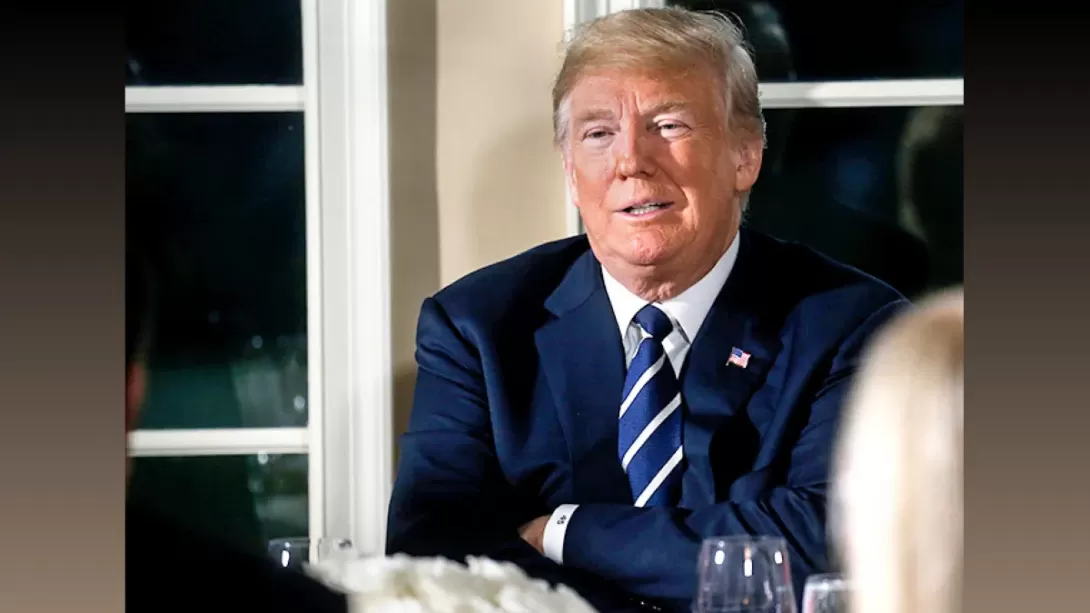
Mukesh Ambani, Asia’s wealthiest man and chairman of Reliance Industries, is set to attend a state dinner in Doha hosted by the Emir of Qatar in honor of U.S. President Donald Trump. This marks his second interaction with Trump since the American leader’s return to office in January. While official discussions are reportedly off the agenda, the event underscores the deep and intricate web of political and commercial relationships linking Ambani, the United States, and the Gulf. With strategic interests spanning energy, retail, and technology, Ambani’s presence signals more than ceremonial diplomacy—it reflects evolving dynamics in global business.
Diplomatic Presence Meets Strategic Interests
Mukesh Ambani’s scheduled presence at a high-profile state dinner in Doha on Wednesday comes at a time when international business alliances are under renewed scrutiny. According to sources familiar with the event, the gathering will be held at the opulent Lusail Palace, where the Emir of Qatar will host U.S. President Donald Trump. The event is part of Trump's diplomatic tour in the Gulf region.
Although no formal business talks are expected during this particular engagement, the convergence of key players from the worlds of politics and commerce highlights the increasingly blurred lines between statecraft and corporate strategy. Reliance Industries Ltd., the sprawling conglomerate helmed by Ambani, has remained silent on inquiries regarding the visit.
Reliance’s Transnational Footprint
Reliance Industries holds significant stakes in energy trade, digital ventures, and global retail—sectors tightly interwoven with U.S. policy decisions. Notably, the company previously secured U.S. waivers to resume crude oil imports from Venezuela. However, those imports were halted in March after President Trump imposed a 25% tariff on oil sourced from the South American nation.
Additionally, Reliance plays a critical role in transnational fuel markets, exporting refined products such as gasoline—often derived from Russian crude—into the United States. The complex interplay between Reliance’s sourcing strategies and Washington’s geopolitical directives underscores the importance of informal diplomatic channels, even when formal business is not on the docket.
Tech Partnerships and Gulf Investments
Reliance’s digital ecosystem has attracted substantial investment from U.S. technology behemoths. Both Google and Meta have acquired equity stakes in Ambani's digital initiatives, underlining the company’s pivotal position at the crossroads of innovation, infrastructure, and market access.
The conglomerate also enjoys robust ties with Qatar. The Qatar Investment Authority (QIA), the nation’s sovereign wealth fund, has injected approximately USD 1 billion into Reliance Retail, marking one of the largest cross-border investments in India's consumer sector. This relationship adds further context to Ambani’s presence at a state dinner hosted in Doha, positioning him not merely as a guest but as a symbol of India’s growing integration into Gulf-American financial circuits.
A Longstanding Rapport with the Trumps
Ambani’s rapport with the Trump family spans several years and multiple continents. He and his wife, Nita Ambani, attended President Trump’s second inauguration in January 2025 and participated in an exclusive candlelit dinner the evening before, attended by a tightly curated guest list of 100. During that evening, the Ambanis also met Vice President JD Vance and his wife Usha.
Their association with the Trump family extends back to 2017, when Mukesh Ambani was present for Ivanka Trump’s visit to Hyderabad during the Global Entrepreneurship Summit. He also participated in Trump’s official visit to India in February 2020.
More recently, the Trumps were guests at a lavish three-day celebration in March 2024, honoring the upcoming wedding of Ambani’s youngest son, Anant, and his fiancée Radhika Merchant. Among the notable attendees were Ivanka Trump, Jared Kushner, and their daughter Arabella Rose, further cementing the personal and political proximity between the two families.
Conclusion: Influence Without Borders
Mukesh Ambani’s anticipated presence at the Lusail Palace dinner exemplifies the soft power wielded by global business magnates in the sphere of geopolitics. Even without direct business discussions, such engagements often serve as fertile ground for shaping future policy directions, building alliances, and sustaining strategic narratives.
As the lines between corporate ambition and diplomatic engagement continue to blur, Ambani’s actions underscore an emerging reality: in today’s interconnected world, business leaders do not just attend state dinners—they help write the subtext of international relations.
Comments