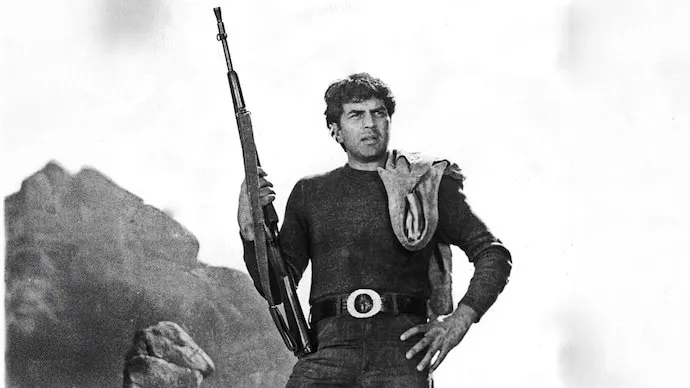
Dharmendra’s career stands as a powerful testament to a man who challenged the prevailing definitions of strength, heroism, and morality in Indian cinema. Known as Bollywood’s “He-Man,” he built his legacy not merely on physical prowess but on a nuanced portrayal of masculinity that balanced vulnerability, courage, and deep emotional resonance. At a time when male stardom was often defined by strict binaries, Dharmendra carved a path that blended sensitivity with bravado, making him an enduring cultural figure. His personal choices, complex relationships, and on-screen narratives reflect a life that defied conventional expectations, shaping a distinctive legacy in film history.
---
A Star Who Redefined Masculinity
Dharmendra entered the industry during an era shaped by stoic heroes and rigid portrayals of masculinity. His presence, however, signaled a shift. While his muscular frame contributed to the “He-Man” label, it was his quiet intensity and emotional expressiveness that made him stand apart. His performances showed that strength could coexist with vulnerability, enabling audiences to see a hero who was powerful without being unapproachable.
This departure from the archetype helped broaden the definition of male stardom. Dharmendra became a symbol of balanced masculinity—strong yet compassionate, assertive yet deeply human.
---
Crafting a Complex On-Screen Persona
Across his vast filmography, Dharmendra portrayed a spectrum of characters—rebels, romantics, farmers, police officers, and flawed men battling inner conflict. His ability to transition between roles demonstrated both artistic versatility and an intuitive understanding of audience sentiment.
Whether delivering high-octane action sequences or tender romantic dialogues, he infused every character with an authenticity that resonated beyond the script. His portrayal in films that explored social inequality, rural hardship, and moral choices showcased a thoughtful engagement with deeper societal themes.
In this sense, Dharmendra was not just a star; he was a storyteller who used emotion, humor, and quiet defiance to build characters that mirrored the complexities of real life.
---
A Personal Life Marked by Choices Outside Convention
Dharmendra’s off-screen journey attracted considerable public interest, particularly because he made choices that contrasted sharply with the moral rigidity expected of public figures at the time. His relationships, decisions around marriage, and emotional connections often fueled debate, yet they also revealed his resistance to performative morality.
Instead of conforming to an idealized public image, Dharmendra lived life on his terms. His approach reflected a broader truth about individuality—one that challenged the belief that public figures must inhabit faultless narratives. This rare honesty contributed to his mystique and cemented his reputation as a man guided by his own convictions rather than societal pressures.
---
The Cultural Impact of Dharmendra’s Persona
Dharmendra’s influence extended beyond cinema into broader cultural conversations about masculinity. At a time when hyper-macho archetypes often dominated popular culture, he presented a more layered model—one that embraced tenderness as a form of strength.
His screen presence subtly demonstrated that moral complexity did not diminish heroism. Instead, it magnified it. This shift helped shape future portrayals of male leads in Indian cinema, encouraging actors and filmmakers to explore more emotionally diverse character structures.
---
A Legacy That Continues to Inspire
As newer generations discover Dharmendra’s work, his relevance remains remarkably intact. His ability to harmonize physical strength with emotional sophistication continues to influence storytelling, public perception of heroes, and the evolution of cinematic identity.
The “He-Man” of Bollywood was never defined solely by muscular roles or conventional bravado. He was a pioneer who pushed against societal rules, reformulated ideas of manhood, and set a precedent for authenticity in both art and life.
Dharmendra’s story is not just one of cinematic triumph—it is a narrative of a man who lived unapologetically, felt deeply, and reshaped the moral boundaries of an industry that continues to celebrate his audacity.
Comments