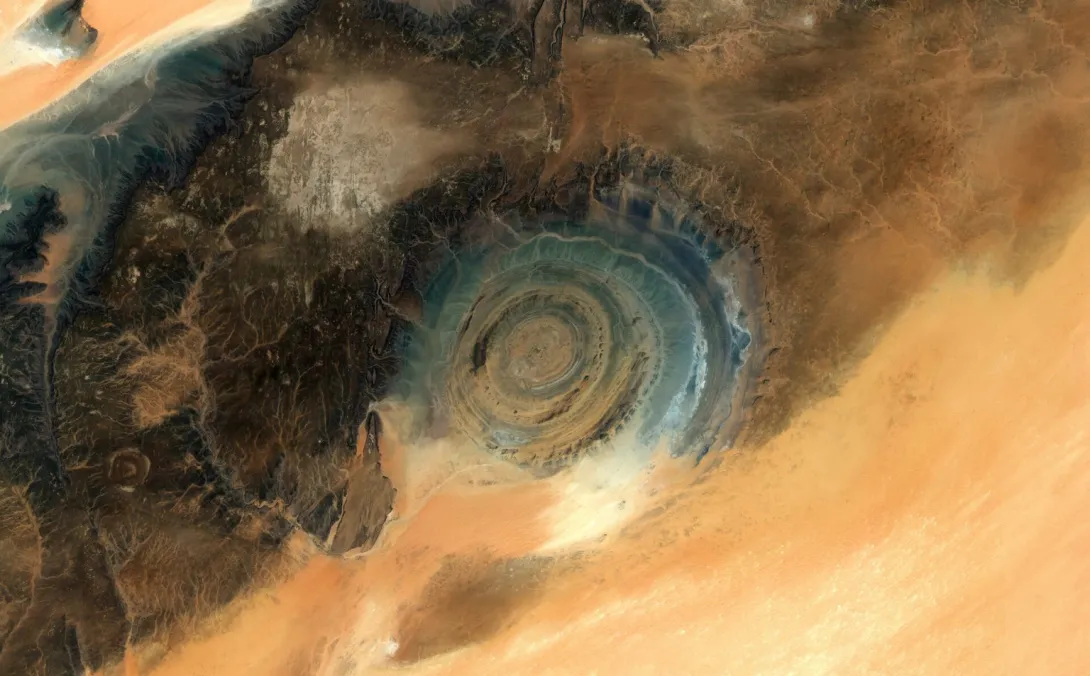
In a groundbreaking astronomical discovery, scientists have identified a ring system encircling the exoplanet Jabal Arkanū, marking a significant advancement in exoplanetary studies. Observed from a network of Sahara-based telescopes, the planet exhibits a complex ring structure reminiscent of Saturn, providing unprecedented insights into planetary formation beyond our solar system. Researchers emphasize that these rings, composed of dust, ice, and small rocky debris, may reveal clues about Jabal Arkanū’s evolution, gravitational dynamics, and potential satellite formation. This finding underscores the growing role of terrestrial observatories in high-precision exoplanet research and sets the stage for further explorations of distant planetary systems.
Discovery and Observational Details
The rings around Jabal Arkanū were detected through advanced photometric and spectroscopic techniques:
- Location of Observation: Sahara Desert observatories, benefiting from clear skies and minimal light pollution.
- Methodology: Transit photometry revealed periodic dimming patterns, consistent with ringed structures around a massive exoplanet.
- Significance: Rings provide indirect evidence of the planet’s gravitational influence and shed light on debris disk dynamics in distant planetary systems.
Astronomers note that the Sahara’s unique atmospheric conditions enhanced the clarity and precision of these measurements.
Characteristics of Jabal Arkanū’s Rings
Early analyses indicate:
- Composition: Primarily ice and fine dust, with traces of rocky material.
- Structure: Multiple concentric rings with varying densities, suggesting active particle migration and aggregation.
- Size: Estimated ring span surpasses that of Saturn’s, indicating substantial mass distribution and potential for satellite formation.
These features provide crucial insights into planetary ring dynamics outside our solar system.
Implications for Planetary Science
The discovery carries far-reaching implications for understanding exoplanetary evolution:
- Satellite Formation: Rings may eventually coalesce into moons, offering parallels to early solar system dynamics.
- Gravitational Studies: The structure and distribution of rings provide indirect measures of Jabal Arkanū’s mass and internal composition.
- Comparative Planetology: Insights from this system allow scientists to compare ring formation mechanisms across diverse planetary environments.
Researchers anticipate that future infrared and space-based observations will refine knowledge of ring composition and particle dynamics.
Role of Ground-Based Observatories
The Sahara observation campaign highlights the critical role of terrestrial telescopes in exoplanetary studies:
- Cost-effective Monitoring: Provides high-resolution data at a fraction of the cost of space missions.
- Collaborative Efforts: Involves international teams analyzing photometric and spectroscopic data to detect subtle planetary features.
- Complementary Data: Works alongside satellite-based telescopes to validate and expand discoveries.
Ground-based initiatives continue to bridge observational gaps, making significant contributions to planetary science.
Conclusion: Expanding Horizons in Exoplanetary Research
Jabal Arkanū’s ring discovery represents a milestone in the study of exoplanets, showcasing the potential for complex planetary systems beyond our solar system. By combining innovative observation techniques with strategic terrestrial positioning, scientists are unraveling new aspects of planetary formation and evolution. As studies progress, these findings are expected to inform theories on satellite generation, ring stability, and planetary dynamics, positioning Jabal Arkanū as a key subject in the emerging field of comparative exoplanetology.
Comments