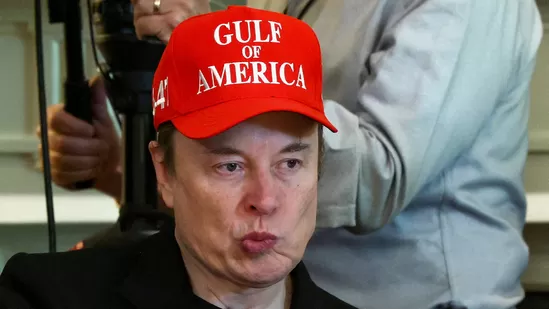
Tesla Inc., long synonymous with Elon Musk’s visionary leadership, is now quietly preparing for a future without him at the helm. The board of directors has initiated an early-stage search for a new CEO, responding to concerns about Musk’s growing focus on his other ventures. This pivotal move comes at a time of intensifying industry competition, slowed sales momentum, and increased investor skepticism. With challenges mounting and innovation timelines slipping, the market is watching closely to see whether a leadership transition can preserve Tesla’s pioneering edge or signal a new era for the electric vehicle (EV) giant.
Leadership Search: A Subtle Shift at the Top
Tesla’s board of directors has begun preliminary efforts to identify a successor to CEO Elon Musk, a figure whose personal brand has been deeply intertwined with the company’s identity since 2008. According to sources close to the situation, the succession planning process is still in its infancy, with no formal outreach to potential candidates. However, both internal executives and experienced external leaders from the manufacturing and technology sectors are reportedly under consideration.
This strategic contemplation follows Musk’s increasing commitment to other ventures—his AI company xAI, social media platform X (formerly Twitter), and aerospace firm SpaceX. While Musk is not expected to exit Tesla completely, insiders suggest he would remain as chairman and maintain significant sway over the company’s long-term strategy.
Tesla’s Operating Challenges: Slowing Momentum
The timing of this internal deliberation is far from incidental. Tesla is grappling with a slew of headwinds that could shape its trajectory for years to come. Despite having once led the global shift toward electric mobility, the company now finds itself on less stable footing. Sales growth has softened in recent quarters, especially amid heightened competition from both legacy automakers like Ford and GM and aggressive new entrants from China such as BYD.
Tesla’s stock, historically buoyed by Musk’s charisma and bold promises, has exhibited increased volatility. Investor confidence is being tested, not only by the company's delivery figures but also by the long delays in launching key products—most notably, the long-promised low-cost EV model and advancements in its Full Self-Driving (FSD) software.
As of the last trading week, Tesla shares have seen erratic movement. The stock has struggled to maintain gains, with fluctuations driven by uncertain delivery forecasts, price-cutting strategies that squeeze margins, and broader concerns about the sustainability of Musk’s multitasking leadership style.
Strategic Implications of a CEO Transition
A potential change in leadership introduces a layer of unpredictability. Musk’s unparalleled ability to capture public attention, marshal investor enthusiasm, and drive rapid innovation has been a core pillar of Tesla’s success. Replacing that charisma with operational competence—while appealing to institutional investors—may shift the company’s tone but could also bring needed discipline.
Tesla’s board must tread carefully. Bringing in an outsider may signal a break from the Musk-era playbook, possibly unsettling the market. On the other hand, elevating an internal executive—perhaps someone like Tom Zhu, head of global automotive operations—could provide continuity while reducing dependence on Musk’s personality-driven leadership.
Regardless of the direction chosen, any transition will reverberate beyond Tesla. As the EV sector becomes more commoditized, leadership agility and execution will increasingly define winners. Tesla can no longer rely solely on its first-mover advantage; it must now outperform in manufacturing scale, price efficiency, and regulatory navigation.
Regulatory Pressure and Delayed Innovation
Meanwhile, regulatory scrutiny over Tesla’s Autopilot and FSD systems has intensified globally. U.S. and European regulators have questioned the safety and marketing of these semi-autonomous features, a domain where Tesla once claimed unmatched leadership. Combined with production delays, particularly in launching a sub-Rs. 20 lakh EV to capture emerging markets, the innovation pipeline appears clogged.
Moreover, investor critiques around Tesla’s governance structure—where Musk wields substantial influence while overseeing multiple companies—have gained renewed traction. Calls for a clearer succession plan and improved board independence are not just governance concerns; they are now investment considerations.
The Road Ahead: Reinvention or Retreat?
Tesla stands at a strategic inflection point. The company that once symbolized disruptive innovation must now evolve into a mature, scalable enterprise that can withstand both internal and external pressures. Whether the board’s search results in a new CEO within months or years, the acknowledgment that a change is necessary speaks volumes about where Tesla is headed.
If executed with precision, this transition could offer Tesla a chance to reinvent itself with steadier leadership, clearer operational priorities, and renewed investor trust. But if mishandled, it risks diluting the brand’s edge and alienating the fervent base that sees Musk as irreplaceable.
In a market that punishes hesitation and rewards execution, Tesla must prove that its future doesn’t depend on a single personality—but rather on institutional strength, innovation delivery, and an ability to navigate the road ahead with clarity and conviction.
Comments