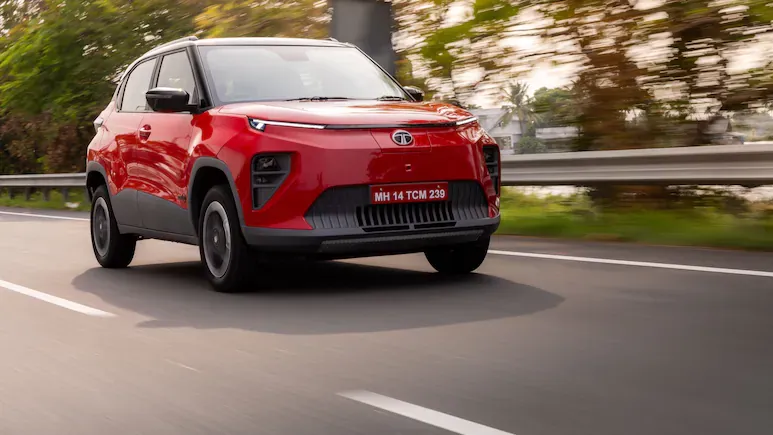
Tata Motors has unveiled an updated version of its Punch EV, introducing improved driving range, enhanced technology integration and refined design elements aimed at strengthening its position in India’s competitive electric vehicle market. The facelift reflects the automaker’s continued investment in battery optimization and consumer-centric features as demand for affordable electric mobility accelerates. With upgraded connectivity tools and improved efficiency metrics, the Punch EV seeks to appeal to urban commuters and first-time EV buyers. The launch underscores Tata Motors’ strategy of consolidating leadership in the domestic EV segment through incremental innovation and value-driven pricing.
A Strategic Upgrade in the Compact EV Segment
Tata Motors has introduced a refreshed iteration of the Tata Punch EV, signaling its intent to reinforce dominance in India’s rapidly expanding electric passenger vehicle market.
The facelifted model emphasizes extended range capabilities, a factor that remains pivotal for buyers evaluating electric vehicles in urban and semi-urban markets. Range anxiety continues to influence purchasing decisions, and incremental gains in battery efficiency can materially enhance consumer confidence.
Industry analysts view the update as a calculated move to defend market share amid intensifying competition from domestic and international entrants.
Improved Battery Efficiency and Driving Range
Central to the facelift is an optimized battery management system designed to deliver improved real-world driving range. While official figures vary depending on usage conditions and battery configuration, the updated Punch EV offers a measurable increase over its predecessor.
Enhanced thermal management and energy recuperation systems contribute to greater efficiency, allowing drivers to extract more kilometers per charge. For cost-conscious consumers, extended range translates into lower charging frequency and improved convenience.
The upgrade also aligns with broader technological advancements in lithium-ion battery chemistry and software-driven energy optimization.
Technology and Connectivity Enhancements
Beyond performance improvements, Tata Motors has integrated new digital features into the refreshed model. The Punch EV now incorporates an upgraded infotainment system with expanded connectivity functions, including smartphone integration, navigation enhancements and real-time vehicle diagnostics.
Advanced driver-assistance features and safety enhancements have also been refined, reinforcing the vehicle’s positioning as a practical yet technologically contemporary offering in the compact SUV segment.
As automotive consumers increasingly prioritize digital interfaces and connected ecosystems, such features serve as key differentiators in a crowded marketplace.
Pricing Strategy and Market Positioning
While detailed pricing varies by variant, the Punch EV facelift is expected to remain competitively positioned within the sub-compact electric SUV category, with price points denominated in Rs. to maintain affordability for middle-income buyers.
Tata Motors has consistently leveraged economies of scale and localized manufacturing to manage costs. The company’s established EV supply chain provides an advantage in maintaining price discipline while incorporating incremental upgrades.
Market observers suggest that value retention and resale potential will further influence demand, particularly as the secondary market for EVs matures.
India’s EV Landscape: Growth and Competition
India’s electric vehicle market is experiencing structural expansion driven by government incentives, rising fuel costs and environmental awareness. States across the country continue to promote EV adoption through subsidies and infrastructure support.
Tata Motors has maintained a leading share of the domestic EV passenger vehicle market, benefiting from early-mover advantage and brand recognition. However, competition is intensifying as new models enter the segment with differentiated features and aggressive pricing.
In this context, periodic facelifts and performance enhancements are essential to sustaining consumer interest.
Outlook: Incremental Innovation as Competitive Edge
The updated Punch EV illustrates Tata Motors’ incremental innovation strategy—refining existing platforms rather than relying solely on entirely new product launches. Such an approach reduces development risk while responding swiftly to evolving consumer expectations.
As charging infrastructure expands and battery costs gradually decline, compact EVs are poised to capture a larger share of India’s urban mobility market.
The Punch EV facelift, with its extended range and upgraded features, reflects a broader narrative: India’s electric mobility revolution is no longer experimental. It is entering a phase defined by product sophistication, operational efficiency and competitive intensity—conditions under which only disciplined, forward-looking manufacturers are likely to thrive.
Comments