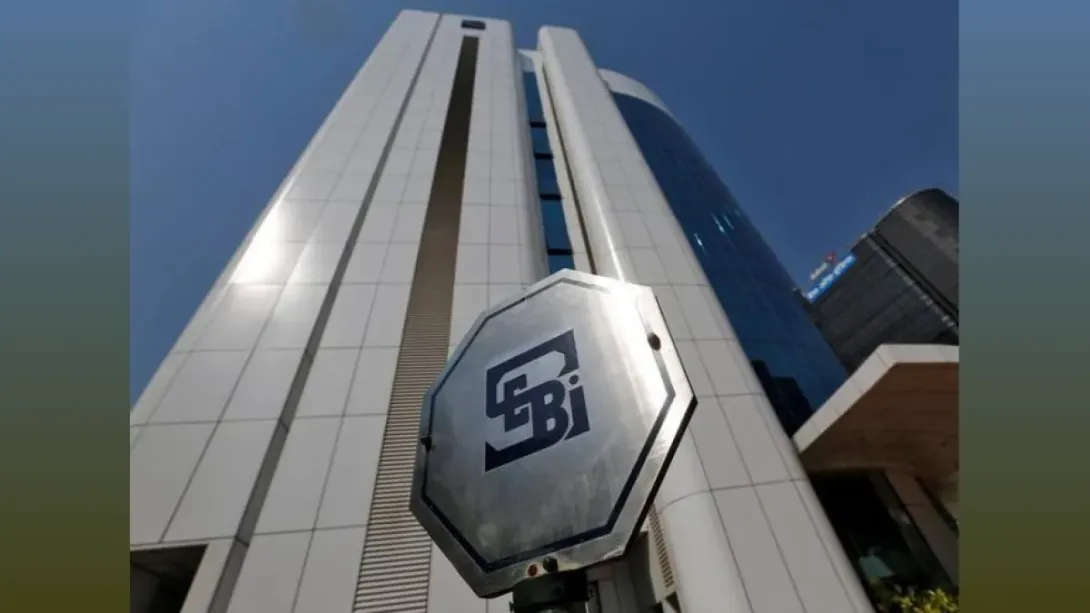
India’s capital markets regulator, Securities and Exchange Board of India, has imposed a monetary penalty on Coffee Day Enterprises for alleged accounting lapses and disclosure failures. The order underscores regulatory scrutiny over financial reporting standards and corporate governance practices among listed entities. According to the regulator, discrepancies in financial statements and non-compliance with prescribed norms warranted enforcement action. The development revives concerns over transparency and internal controls at the company, once emblematic of India’s consumer brand boom, and reinforces Sebi’s tightening oversight to protect minority shareholders and uphold market integrity.
Regulatory Action Signals Accountability
The Securities and Exchange Board of India, commonly known as Sebi, has levied a financial penalty on Coffee Day Enterprises after identifying irregularities in its accounting disclosures. The regulator concluded that certain financial transactions and reporting practices failed to adhere to mandated disclosure standards under listing and compliance regulations.
While the exact quantum of the penalty was not publicly elaborated in detail, regulatory action of this nature typically involves fines running into several lakh rupees, depending on the severity and duration of non-compliance. The enforcement order emphasizes the statutory obligation of listed companies to maintain transparent books and timely disclosures.
Sebi’s action forms part of a broader effort to reinforce confidence in India’s equity markets, particularly following high-profile corporate governance controversies in recent years.
Nature of the Accounting Lapses
According to the regulator’s findings, the violations pertained to deficiencies in financial reporting and lapses in internal controls. Such irregularities can include delayed disclosures, misclassification of transactions, or inadequate reporting of related-party dealings.
Accurate accounting is central to investor decision-making. Even minor inconsistencies can distort financial ratios, misrepresent leverage positions, or obscure liquidity risks. For publicly traded companies, compliance with accounting standards is not merely procedural — it is foundational to market credibility.
Regulatory scrutiny in this case underscores the expectation that boards and audit committees exercise rigorous oversight over financial statements before public dissemination.
Corporate Governance Under the Spotlight
Coffee Day Enterprises, which operates the well-known Café Coffee Day retail chain, has faced financial and governance challenges in recent years. The company has undertaken restructuring measures aimed at reducing debt and stabilizing operations.
Regulatory penalties, even when modest in financial magnitude, carry reputational consequences. They serve as public markers of compliance gaps and can influence investor perception, credit ratings and institutional confidence.
Sebi’s order reinforces the principle that governance standards must remain uncompromising, particularly for companies navigating financial stress.
Market Implications and Investor Sentiment
While enforcement actions of this scale may not immediately alter operational fundamentals, they can impact short-term investor sentiment. Markets tend to react sensitively to signals of accounting irregularities, given their potential implications for earnings reliability.
Institutional investors increasingly integrate governance metrics into valuation models. Any indication of internal control weaknesses may widen risk premiums or compress valuation multiples, especially in sectors reliant on consumer trust.
That said, corrective action and regulatory closure can also provide clarity, enabling companies to move forward with improved compliance frameworks.
Broader Regulatory Context
Sebi has intensified oversight of listed companies, strengthening disclosure norms and enforcement mechanisms. The regulator’s recent actions across sectors highlight a zero-tolerance approach toward accounting deviations and governance lapses.
India’s capital markets have grown substantially in depth and participation, with rising retail investor inflows and expanding market capitalization. Sustaining this growth requires robust regulatory enforcement to maintain transparency and fairness.
By holding companies accountable, Sebi aims to preserve systemic stability and investor confidence — cornerstones of a mature financial ecosystem.
The Road Ahead for Coffee Day Enterprises
For Coffee Day Enterprises, the immediate priority will likely be reinforcing internal audit processes, enhancing board-level oversight and ensuring full regulatory compliance going forward. Transparent engagement with shareholders and prompt corrective measures could mitigate reputational damage.
Ultimately, regulatory scrutiny, though uncomfortable, can catalyze structural improvements. In capital markets, credibility is currency. Companies that address governance weaknesses decisively often emerge stronger and more resilient.
Sebi’s penalty serves as a reminder that financial discipline and transparent accounting remain non-negotiable pillars of corporate India’s long-term sustainability.
Comments