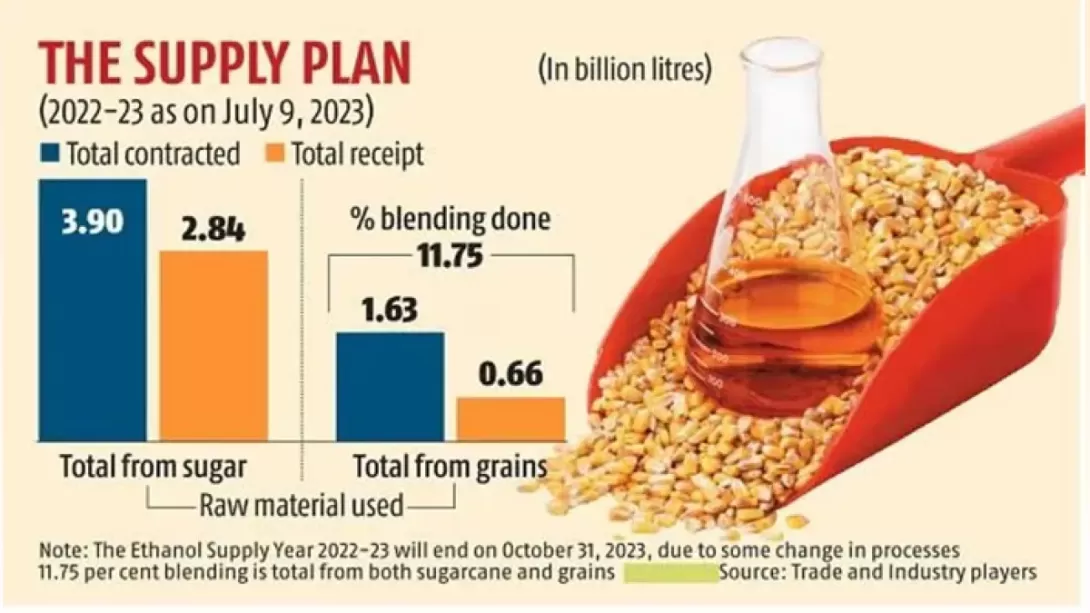
India’s ethanol blending ambitions, particularly the 30% target by 2030, present a transformative economic and environmental opportunity—but one that remains underutilized due to key structural bottlenecks. A recent report by Primus Partners and the Grain Ethanol Manufacturers Association (GEMA) outlines actionable strategies to boost ethanol production through maize promotion, feedstock diversification, and robust policy frameworks. Rising maize prices and static ethanol procurement rates are eroding producer margins. However, by leveraging surplus rice, incentivizing maize cultivation, and expanding the domestic market for Distiller’s Dried Grains with Solubles (DDGS), India can unlock a potential Rs. 35,000 crore economic windfall for farmers and significantly cut carbon emissions.
Maize: The Critical Link in India's Ethanol Chain
The report underscores that maize is central to ethanol expansion, but its rising prices have made ethanol production economically unviable for many producers. Without dynamic pricing mechanisms or procurement adjustments, profit margins for grain ethanol manufacturers remain thin, deterring both current production and future investments. To remedy this, the report calls for incentives to shift farmers toward maize cultivation, including access to high-yield seeds, fertilizers, and enhanced irrigation infrastructure. Building a strong maize supply chain is pivotal not just for ethanol output but also for long-term energy security and rural income diversification.
Feedstock Diversification Through Surplus Rice
Given the time required to scale maize output, the report recommends the interim use of damaged, broken, or surplus rice from the Food Corporation of India (FCI) as ethanol feedstock. However, ethanol producers require clear and consistent government policies regarding the availability and pricing of such rice stock. Uncertainty in these areas has hindered long-term planning and discouraged large-scale investment in ethanol facilities. Policy predictability around surplus rice could be a game-changer, bridging the gap until maize production catches up with ethanol blending targets.
Grain Ethanol Market Faces Profitability Crisis
In the last Ethanol Supply Year (November–October), grain ethanol producers operated at a loss due to a mismatch between rising input costs and stagnant ethanol procurement prices. This "dampening of entrepreneurial spirit," as the report describes it, threatens to slow India's progress toward its blending goals. Without financial viability, many producers may pivot away from ethanol or reduce output, potentially increasing reliance on fossil fuels and missing critical climate targets. Adjusting procurement rates in line with feedstock inflation is essential to sustaining this green industry.
DDGS: An Untapped By-product with Economic Promise
Distiller’s Dried Grains with Solubles (DDGS), a high-protein by-product of ethanol production, holds enormous potential for India’s animal feed sector. However, domestic uptake has remained low due to lack of awareness, demand incentives, and competition from imported alternatives. The report suggests government subsidies or tax benefits for domestic feed manufacturers to encourage DDGS usage and recommends exploring tariffs on imported DDGS to level the playing field. Developing a robust domestic DDGS market could increase ethanol plant profitability and create a sustainable circular economy around ethanol production.
Blending Targets and the Emission Reduction Imperative
India’s goal to achieve 30% ethanol blending by 2030 is both ambitious and essential. According to NITI Aayog, this would require approximately 1,735.5 crore litres of ethanol annually—out of a total projected gasoline demand of 5,785 crore litres. If met, this target could reduce greenhouse gas emissions by 347.1 lakh tonnes annually, of which 197.85 lakh tonnes would be mitigated through grain-based ethanol alone. The environmental benefits are clear—but achieving them requires immediate and coordinated action across agricultural, energy, and trade ministries.
Policy Recommendations to Unlock Rs. 35,000 Crore Potential
The combined economic benefit from unlocking the grain ethanol ecosystem is estimated at Rs. 35,000 crore, most of which would flow directly to India’s rural and farming communities. To realize this potential, the report recommends:
- Dynamic ethanol pricing models that reflect input cost variations
- Incentives for maize cultivation and investment in irrigation infrastructure
- Policy clarity on FCI surplus rice utilization
- Development of a DDGS ecosystem supported by tax incentives and trade regulations
- Public-private partnerships to scale ethanol infrastructure and storage
Failing to act on these recommendations risks stalling a sector that could redefine India’s fuel economy and empower millions of rural households.
Conclusion: Ethanol as India’s Dual Engine of Growth and Sustainability
India’s grain ethanol sector stands at a crucial inflection point. With proper policy support, pricing reforms, and infrastructure development, it could serve as a strategic lever to boost farm incomes, reduce fuel imports, and meet climate goals simultaneously. The roadmap is clear: promote maize, ensure feedstock access, strengthen by-product markets, and align procurement prices. By doing so, India could unlock a Rs. 35,000 crore green economy opportunity—one that benefits farmers, consumers, and the planet.
Comments