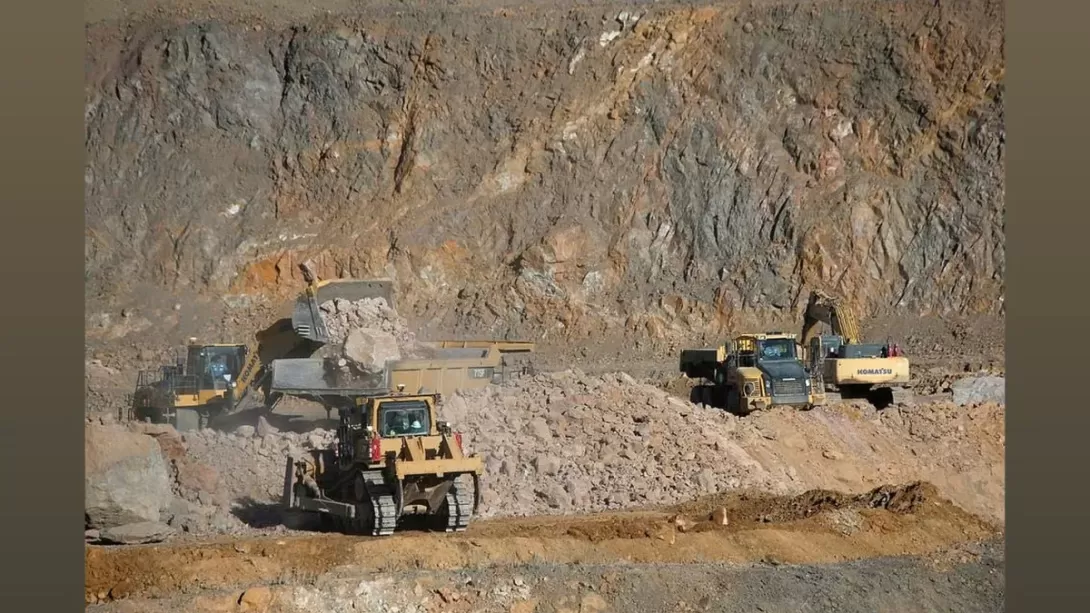
State-run Hindustan Copper Ltd (HCL) has announced a bold Rs. 2,000 crore investment plan over the next five to six years aimed at significantly expanding its mining footprint. This capital expenditure, largely focused on the Malanjkhand Copper Project in Madhya Pradesh, is part of HCL’s broader strategy to triple its ore production capacity to 12.2 million tonnes per annum (MTPA) by FY2030-31. The investment underscores India's push to boost domestic copper production amid rising demand from critical sectors including infrastructure, electric vehicles, and renewable energy.
Strategic Investment to Meet Surging Domestic Demand
Hindustan Copper Ltd, India's only vertically integrated copper producer, has committed Rs. 2,000 crore over the medium term to scale up its mining operations, with nearly three-quarters of this capital earmarked for the Malanjkhand Copper Project (MCP). This strategic move is designed to help the company meet the country’s growing appetite for copper, an essential component in infrastructure, clean energy, and electric mobility.
According to HCL Chairman and Managing Director Sanjiv Kr Singh, MCP alone will receive an infusion of approximately Rs. 1,400–1,500 crore. The remainder of the capital will be channelled into projects at Khetri in Rajasthan and the Indian Copper Complex (ICC) in Jharkhand.
Malanjkhand: The Flagship Growth Engine
At the heart of HCL’s expansion is the Malanjkhand project, which will undergo significant infrastructural upgrades. The expansion plan includes the development of underground mining systems, installation of a modern paste-fill plant, and construction of a new concentrator facility to increase processing efficiency. This transformation positions MCP as the core pillar of HCL’s future output growth.
With this, the company targets a threefold increase in overall ore production—from the current 4 MTPA to a projected 12.2 MTPA by the end of FY31.
Reviving Legacy Assets Through Public-Private Collaboration
Separate from this core capex, HCL is also pursuing a revival of its Rakha and Chapri assets in Jharkhand via the Public-Private Partnership (PPP) route. A subsidiary of the JSW Group has taken on the role of Mine Developer and Operator (MDO) for these projects, with plans to invest around Rs. 2,600 crore. This includes building a concentrator plant, which is expected to restore and modernize operations at the long-dormant sites.
Operations at the Rakha mine, part of the Indian Copper Complex, are slated to resume by the fourth quarter of the current fiscal.
Strengthening the Resource Base and Future-Readiness
In addition to operational investments, HCL has also been active on the exploration front. Over the past two years, it has added more than 123 million tonnes of copper ore to its resource base. The company is actively pursuing additional deposits through upcoming mineral block auctions, indicating its ambition to secure long-term resource sustainability.
HCL is also collaborating with Chilean copper giant CODELCO to enhance technical capabilities, particularly in mining and beneficiation processes—an alliance that could yield technological dividends for India’s mining sector.
Financial Resilience and Market Leadership
HCL's financial performance mirrors the momentum of its operational expansion. In FY25, the company achieved its highest-ever revenue of Rs. 2,071 crore and reported a robust profit before tax of Rs. 634 crore. With access to approximately 45 percent of India’s total copper ore resources, HCL remains a dominant player uniquely positioned to support India's domestic supply chain in critical sectors.
Outlook
As global demand for critical minerals accelerates, Hindustan Copper’s expansion initiative is both timely and necessary. It strengthens India's copper production capacity, reduces reliance on imports, and aligns with the national goals of self-reliance in strategic materials. If executed efficiently, the plan could not only transform HCL’s production profile but also reinforce India's positioning in the global copper ecosystem.
Comments