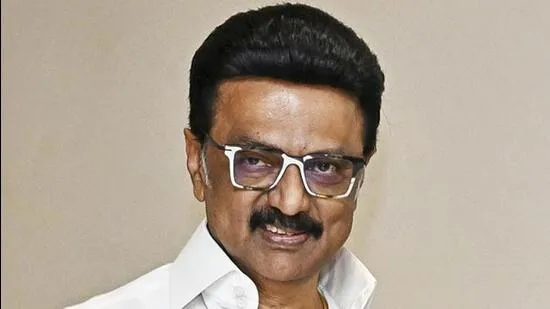
Tamil Nadu Chief Minister M.K. Stalin has firmly dismissed claims that religion is under threat in the state, instead asserting that the political alliance with the Bharatiya Janata Party (BJP) faces the real challenge. His comments come in the wake of a controversial event organized by the right-wing Hindu Munnani group, supported by the BJP, which drew criticism for targeting iconic Dravidian leaders. Stalin accused the BJP-led coalition of divisive politics based on religion and caste, contrasting it with his government’s commitment to secularism and inclusive development. This political dispute underscores the ongoing tension between Dravidian identity politics and Hindu nationalist narratives in Tamil Nadu.
The Political Landscape: Religion and Allegations of Threat
Tamil Nadu’s political discourse recently intensified following a contentious conference organized by Hindu Munnani on June 22, supported by the BJP. The event provoked public debate for airing videos critical of revered Dravidian leaders such as E.V. Ramasamy Periyar and C.N. Annadurai. Chief Minister M.K. Stalin, addressing these developments, rejected any notion that religion in the state was endangered. Instead, he emphasized that the BJP alliance, struggling to establish its foothold in Tamil Nadu, was the real entity under threat.
Stalin’s remarks highlighted the BJP’s strategic pivot towards identity-based politics, which he argued fails to resonate with Tamil Nadu’s electorate. “They do not know how to gain votes here, so they resort to dividing people on religious and caste lines. But the people of Tamil Nadu will not fall for this facade of false devotion,” Stalin stated, underscoring his administration’s efforts to uphold secular values and social harmony.
Government Initiatives on Religious Harmony and Restoration
Reinforcing his point, Stalin outlined the DMK government’s proactive role in maintaining religious harmony by consecrating over 3,000 temples and investing Rs. 84 crore in restoring churches and mosques. These figures signify a deliberate policy of inclusivity, which starkly contrasts with the BJP’s religious polarisation agenda as perceived by the CM.
Such initiatives not only reinforce Tamil Nadu’s rich pluralistic traditions but also serve as political capital in the face of communal tensions stoked by fringe elements allied with national parties. Stalin’s administration appears keen to project governance that transcends sectarian divides, positioning itself as a defender of secular and cultural heritage.
The AIADMK’s Controversial Position and Alliance Dynamics
Stalin also criticized the opposition AIADMK for its conspicuous silence during the conference where Dravidian icons were disparaged. This silence is particularly notable given AIADMK’s recent political rapprochement with the BJP, following its withdrawal from the NDA in 2023 after party state president K. Annamalai’s earlier criticisms of Dravidian leaders.
Despite the backlash, AIADMK deputy leader R.B. Udayakumar distanced the party from the resolutions passed at the event, which called for the abolition of the Hindu Religious and Charitable Endowments (HR&CE) department and urged Hindu electoral unity ahead of the 2026 state elections. However, Stalin was unsparing in his condemnation: “The party that bears Annadurai’s legacy remained silent while his memory was mocked. By mortgaging itself to the BJP, it risks pledging away the state’s future.”
This critique not only highlights the ideological fault lines between the Dravidian movement and the BJP’s Hindu nationalist project but also exposes the fragility of political alliances forged out of expedience rather than shared principles.
The Road Ahead: Electoral Prospects and Political Strategies
Stalin confidently projected his party’s coalition as the inevitable victors of Tamil Nadu’s upcoming assembly elections, predicting wins not only in 2026 but also in subsequent elections through 2036. His vision rests on a platform centered on people’s welfare and secular governance, positioning his coalition as a bulwark against divisive religious politics.
In response, BJP’s K. Annamalai dismissed Stalin’s assertions as theatrical and accused the government of failing to maintain law and order, thereby politicizing the dispute further. This exchange underscores the heightened stakes and polarized atmosphere as Tamil Nadu approaches a critical electoral phase.
Conclusion
The controversy surrounding the Hindu Munnani conference and the ensuing political responses from M.K. Stalin and the BJP-AIADMK alliance epitomize the intricate interplay between religion and politics in Tamil Nadu. While Stalin’s administration projects a narrative of inclusive secularism and cultural preservation, the BJP alliance’s strategy appears anchored in religious and caste-based mobilization.
This clash reflects deeper ideological battles over Tamil Nadu’s identity and political future. The state’s electorate faces a choice not merely between parties but between competing visions for the social fabric and governance of one of India’s most politically vibrant regions.
Comments