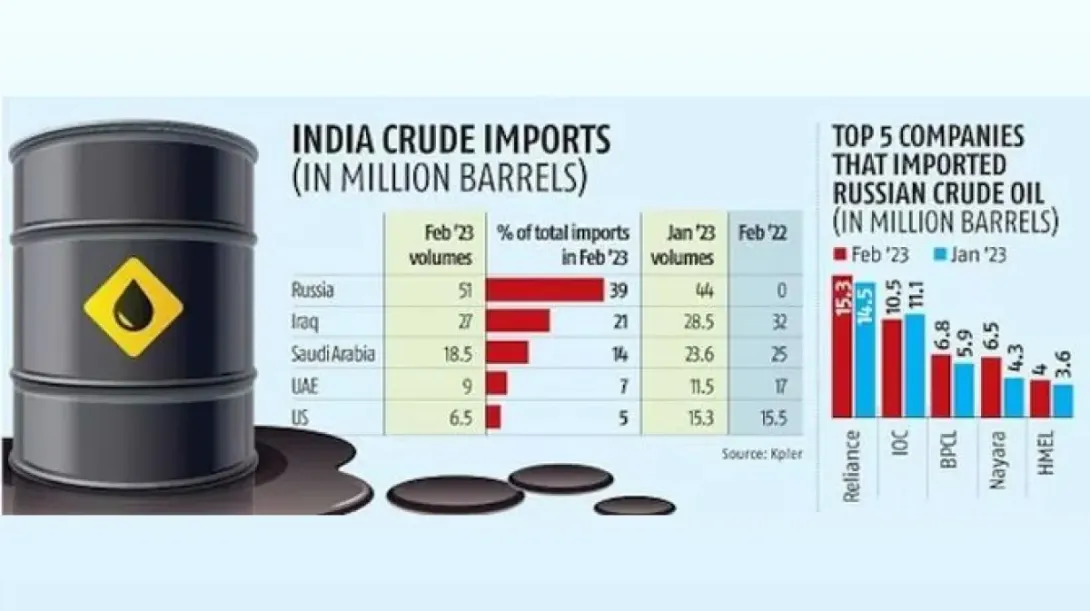
India's fuel export strategy is facing renewed pressure as European Union sanctions on Russian oil continue to ripple across global supply chains. With the EU imposing stricter measures targeting refined petroleum products sourced from Russian-origin crude, Indian exporters are navigating a more complex regulatory and trade environment. The sanctions have not only impacted India’s outbound shipments of fuels such as diesel and jet fuel but have also triggered refiners to reassess their sourcing and blending strategies. As global geopolitics intertwine with energy economics, India's energy diplomacy and refining sector find themselves at a pivotal crossroads.
---
EU Sanctions: A Global Domino Effect
The European Union’s expanded sanctions regime against Russia, designed to curtail revenues that support Moscow’s wartime operations, has deepened its focus on refined oil products. These sanctions extend beyond crude imports, targeting any fuel derived from Russian-origin oil—even if processed outside of Russia.
For India, a major refining hub that has historically imported discounted Russian crude, the implications are significant. A substantial portion of its refined fuel—particularly diesel and aviation turbine fuel—is exported to Europe and other Western-aligned markets. With new compliance filters in place, Indian exporters now face heightened scrutiny over the provenance of feedstock used in their refineries.
---
Impact on India's Fuel Export Dynamics
India’s refiners had capitalized on discounted Russian crude following the Ukraine conflict, using it as an input to produce and export high-value fuels. However, the EU's latest restrictions risk curbing demand for such products, especially in countries bound by sanctions or aligned with Western compliance protocols.
Diesel exports, which comprise a significant share of India’s petroleum trade basket, have already begun to show signs of slowing to key European ports. Refiners are being compelled to reroute cargoes, reconfigure product blends, or provide verifiable documentation of crude origin—adding complexity and costs to logistics and trade execution.
---
Strategic Recalibration by Indian Refiners
Major Indian refiners, both state-run and private, are adapting by exploring alternate sourcing options and reassessing product flows. Some are shifting volumes to Africa, Southeast Asia, and Latin America—regions where scrutiny is lower and demand remains strong. Others are exploring on-site crude segregation techniques to ensure non-Russian feedstock can be processed and certified for sensitive markets.
Furthermore, refiners are seeking legal and logistical clarity on the enforcement mechanisms employed by EU nations, as vague compliance requirements could lead to cargo detentions or refusals at destination ports.
---
Diplomatic Balancing Act
The current situation also places India’s energy diplomacy in a delicate position. While maintaining a strategic partnership with Russia, India must also safeguard its commercial interests in Western markets. This requires diplomatic finesse and proactive engagement with both European regulators and trading partners to avoid inadvertent violations while protecting economic access.
At the same time, Indian policymakers are closely monitoring developments to ensure energy security and export competitiveness remain intact, even as the external environment becomes more volatile.
---
Outlook: Navigating a Fragmented Energy Order
The EU’s evolving sanctions on Russian-origin fuels represent more than a policy tool—they signal a fragmentation of the global energy trade into compliance-based blocs. For India, this fragmentation brings both risk and opportunity. While some markets may close due to regulatory barriers, others may open as global buyers search for agile suppliers unencumbered by geopolitical entanglements.
India’s refining sector—known for its operational scale and adaptability—is likely to innovate its way through this disruption. But the need for greater transparency, traceability, and diplomatic engagement will define how well it sustains its export momentum in the face of growing geopolitical headwinds.
Comments