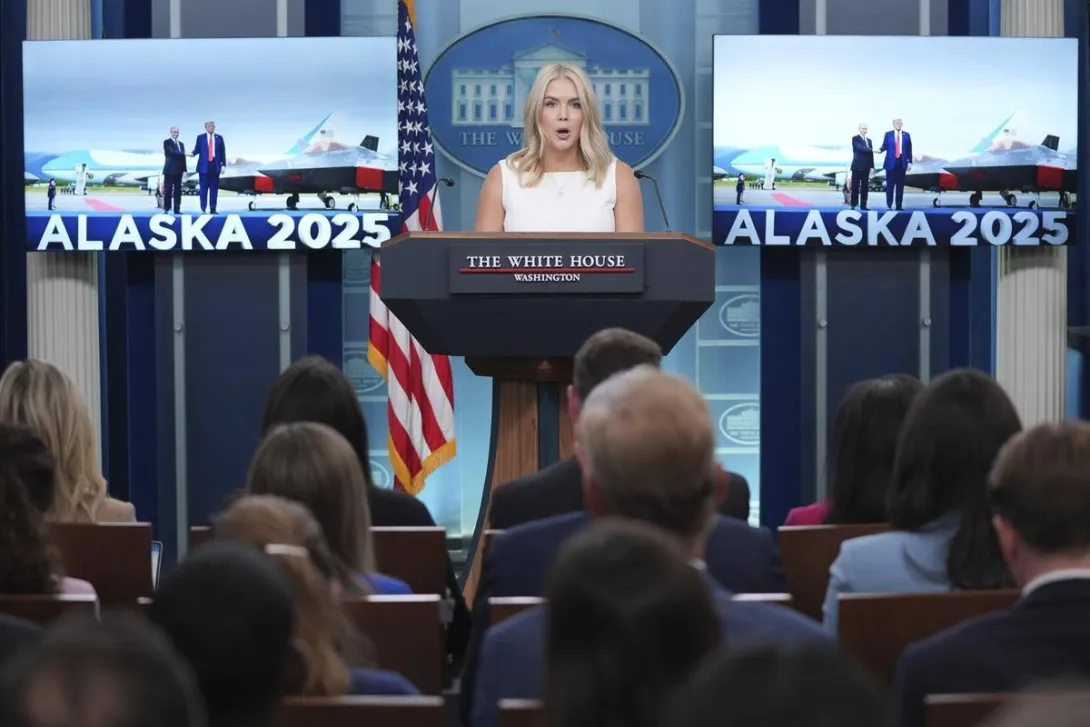
The White House has revealed that tariffs imposed on Indian goods during Donald Trump’s presidency were part of a broader geopolitical strategy aimed at curtailing the Russia-Ukraine conflict. Officials stated that the move was designed not merely as an economic measure but as a tool of diplomatic pressure, signaling Washington’s intent to leverage trade relations to influence global security outcomes. The disclosure underscores the intersection of commerce and international politics, highlighting how tariffs—traditionally instruments of economic policy—can also serve as levers in complex geopolitical negotiations. The announcement is expected to spark debates on the long-term consequences of such trade strategies.
---
Tariffs as a Geopolitical Lever
The United States has historically employed tariffs to protect domestic industries and rebalance trade relationships. However, the White House’s statement reveals that under Trump, tariffs on India had a broader diplomatic intent. The administration believed that economic measures could influence India’s strategic positioning in the Russia-Ukraine conflict, encouraging New Delhi to take a firmer stance aligned with Western allies.
---
India’s Position Amid Global Tensions
India has traditionally maintained a delicate balance in its foreign policy, pursuing strategic autonomy while engaging with both the United States and Russia. The tariffs were viewed by many as a pressure tactic to nudge India toward recalibrating its stance on the conflict. New Delhi, however, has consistently emphasized dialogue and diplomacy as the pathway to peace, resisting overt alignment with either bloc in the ongoing war.
---
Trade and Diplomacy Intertwined
The linkage of tariffs to the Russia-Ukraine war illustrates how international trade measures are increasingly being weaponized for political purposes. Such strategies highlight a growing trend in global diplomacy, where tariffs, sanctions, and export restrictions are employed not only for economic gain but also as instruments of foreign policy. Analysts argue that while these measures may yield short-term leverage, they often risk straining long-term bilateral relationships.
---
Implications for U.S.-India Relations
The revelation could reopen discussions about the future of U.S.-India trade relations. India is one of America’s fastest-growing trading partners, with bilateral trade exceeding Rs. 12 trillion in recent years. Yet, the use of tariffs as a geopolitical tool may raise concerns in New Delhi about the predictability and stability of Washington’s trade policy. On the other hand, closer defense and technology cooperation between the two nations may help offset economic frictions.
---
Conclusion
The White House’s assertion sheds light on the evolving nature of tariffs as instruments of statecraft. While Trump’s approach underscores the fusion of trade and geopolitics, it also raises critical questions about the effectiveness and unintended consequences of such strategies. As India and the U.S. deepen their partnership in defense, energy, and technology, the debate over tariffs will remain central to understanding the balance between economic pragmatism and geopolitical ambition.
Comments