Venus and Earth are often described as planetary siblings, sharing similar size, mass, and proximity to the Sun. Yet despite these similarities, their evolutionary paths could not be more different. Earth thrives as a cradle of life, while Venus endures as a scorching, hostile world dominated by carbon dioxide and crushing atmospheric pressure. For decades, scientists have studied these two planets in tandem, seeking to understand why their trajectories diverged so sharply. New research, powered by space missions and advanced simulations, continues to reveal crucial insights into planetary evolution, climate science, and the potential habitability of exoplanets.
Planetary Similarities and Key Differences
At first glance, Venus and Earth appear remarkably alike. Both are rocky planets with comparable diameters—Venus being just slightly smaller. They are often referred to as “twin planets” due to their shared characteristics. However, the similarities end there.
Venus experiences surface temperatures exceeding 460°C, hot enough to melt lead, while Earth maintains a climate conducive to water and life. Its dense atmosphere, composed of more than 96% carbon dioxide, creates a runaway greenhouse effect that traps heat. In contrast, Earth’s balanced mix of nitrogen, oxygen, and trace gases supports ecosystems and moderates global temperature.
Climate Lessons from Venus
One of the most striking aspects of Venus is its climate system, often viewed as a cautionary tale for Earth. Scientists believe that Venus may once have harbored oceans, but extreme volcanic activity and solar radiation triggered atmospheric changes that evaporated its water reserves. This runaway greenhouse effect transformed it into the furnace we observe today.
For climate researchers, Venus offers a stark reminder of how fragile planetary environments can be. Studying its atmosphere provides valuable lessons for understanding long-term climate change on Earth and modeling scenarios for other planets.
Exploration and Scientific Discoveries
Both NASA and the European Space Agency have announced missions to revisit Venus in the coming decade. NASA’s DAVINCI and VERITAS missions, alongside ESA’s EnVision project, aim to study Venus’s atmosphere, geological history, and surface composition. These missions are expected to answer pressing questions about how Venus became so different from Earth and whether it ever supported habitable conditions.
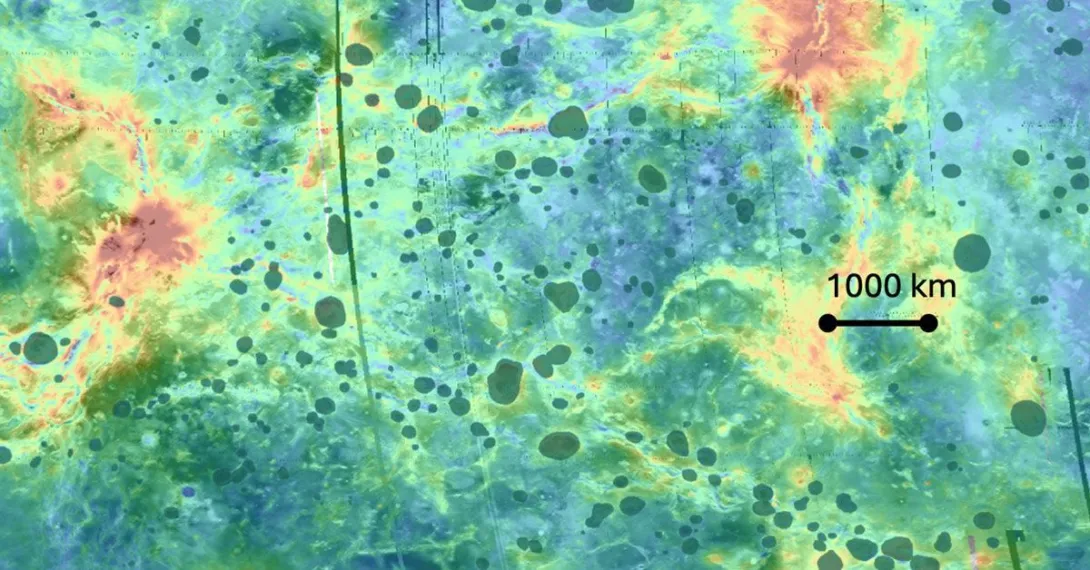
Radar imaging has already revealed evidence of tectonic activity and volcanic structures, suggesting that Venus may still be geologically active. Such findings challenge previous assumptions of the planet as geologically dormant.
Broader Implications for Planetary Science
Comparing Venus and Earth goes beyond curiosity—it has direct implications for exoplanet research. Many planets discovered in distant solar systems share characteristics with Venus. By studying how Venus evolved, scientists can refine their criteria for identifying potentially habitable exoplanets and better understand the fine balance required to sustain life.
In addition, Venusian studies may enhance planetary defense strategies by deepening our understanding of atmospheric dynamics and surface conditions in hostile environments.
Outlook
While Earth and Venus began as planetary siblings, their contrasting fates illustrate the delicate interplay between atmosphere, geology, and solar energy in shaping habitability. As new missions prepare to unlock Venus’s secrets, humanity edges closer to solving one of the most profound scientific mysteries: why did one twin become a sanctuary for life, while the other turned into a furnace of extremes?
The answers could help safeguard Earth’s future—and redefine humanity’s search for life beyond our planet.
Comments