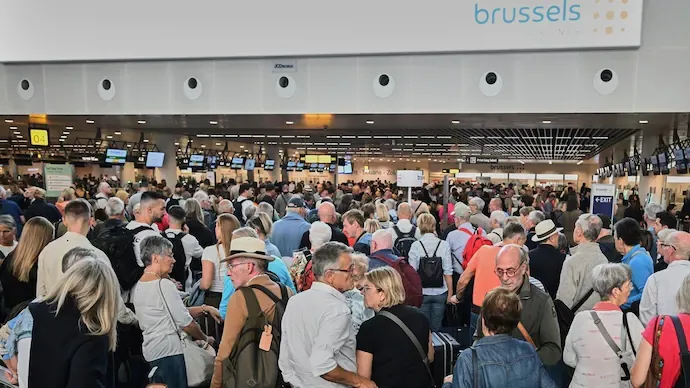
A large-scale cyberattack has struck several major European airports, disrupting flight operations and causing extensive delays for travelers across the continent. The attack targeted critical airport IT infrastructure, including check-in systems, baggage handling networks, and air traffic coordination tools. As authorities scramble to restore normal operations, airlines and passengers face cascading effects, with flight cancellations and rerouting adding to the chaos. Cybersecurity experts have labeled the incident one of the most significant threats to European aviation in recent years, raising concerns about the sector’s vulnerability to digital warfare and the urgent need for enhanced cybersecurity defenses.
The Attack: Scope and Impact
The cyberattack unfolded early in the morning, crippling airport systems across multiple European hubs, including airports in London, Paris, Frankfurt, and Amsterdam. Initial reports indicate that hackers infiltrated central servers that manage key operational functions such as passenger check-in, boarding, and baggage tracking.
Airlines were forced to switch to manual processing, leading to long queues, delays of up to six hours, and mass cancellations. Passengers were left stranded at terminals, while airlines scrambled to rebook affected travelers and provide compensation under European Union flight disruption regulations.
Authorities have not yet disclosed the exact scale of the attack, but preliminary estimates suggest that more than 1,200 flights were either delayed or canceled in the first 12 hours alone.
Airports and Airlines Affected
The worst disruptions were reported at key international airports including:
- London Heathrow and Gatwick: Hundreds of flights delayed as check-in and baggage systems went offline.
- Paris Charles de Gaulle: Ground operations halted for several hours before partial restoration.
- Frankfurt International: Security clearance systems affected, forcing a temporary suspension of departures.
- Amsterdam Schiphol: Departures severely impacted, with airlines issuing travel advisories for passengers to check flight statuses before leaving home.
Budget carriers and full-service airlines alike were affected, including Lufthansa, British Airways, Air France, and KLM, creating ripple effects throughout the European air travel network.
Authorities Respond and Investigate
European aviation regulators and national cybersecurity agencies immediately launched a coordinated response. Teams of IT specialists were deployed to affected airports to isolate the malware and prevent further spread.
Officials confirmed that there is no evidence of a direct threat to flight safety, as air traffic control systems remain on separate, secure networks. However, the operational disruptions caused significant logistical challenges, making it difficult to manage passenger flows and aircraft movements efficiently.
The European Union’s Agency for Cybersecurity (ENISA) has taken the lead in coordinating with national governments, private cybersecurity firms, and international aviation bodies to trace the source of the attack. Early indicators suggest the involvement of a highly sophisticated hacker group, possibly backed by a state actor.
Economic Fallout and Industry Impact
The financial implications of the attack are expected to be substantial. Airlines face significant costs related to refunds, rebooking, and passenger care, while airports grapple with overtime wages and infrastructure repair.
Analysts estimate that the total economic damage could run into hundreds of millions of euros, depending on how quickly systems can be restored. Tourism sectors in affected countries may also experience short-term revenue losses as travelers postpone or cancel trips due to uncertainty.
This incident has reignited debate over the aviation industry’s readiness to counter cyber threats. Experts have long warned that as airports adopt increasingly digitized systems, they become more vulnerable to disruptive cyberattacks.
Cybersecurity Vulnerabilities Exposed
The attack underscores the urgent need for robust cybersecurity measures within the aviation sector. Many airport systems still rely on outdated software and fragmented networks, making them prime targets for cybercriminals.
Cybersecurity specialists emphasize the necessity of regular vulnerability assessments, real-time threat monitoring, and comprehensive incident response strategies. There is also a growing call for closer public-private collaboration, as no single entity can address such large-scale threats independently.
Looking Ahead: Strengthening Defenses
European regulators are expected to introduce stricter cybersecurity compliance requirements for airlines and airports following this incident. Proposals under consideration include mandatory cyber resilience audits, penalties for lax security practices, and greater investment in staff training.
Some governments are exploring the possibility of establishing a centralized aviation cybersecurity command center to coordinate responses to future attacks.
While immediate priorities focus on restoring operations and supporting stranded passengers, the long-term challenge will be to ensure that such a disruption does not recur.
Conclusion
The cyberattack that paralyzed European airports highlights the fragility of modern aviation systems in the digital era. As technology becomes more integrated into every facet of air travel, the stakes of cyber warfare grow exponentially.
This incident serves as a wake-up call for governments, airlines, and regulators to prioritize cybersecurity alongside traditional safety measures. Strengthening digital defenses will be crucial not only for protecting infrastructure but also for safeguarding the trust of millions of travelers who rely on air transport daily.
Comments