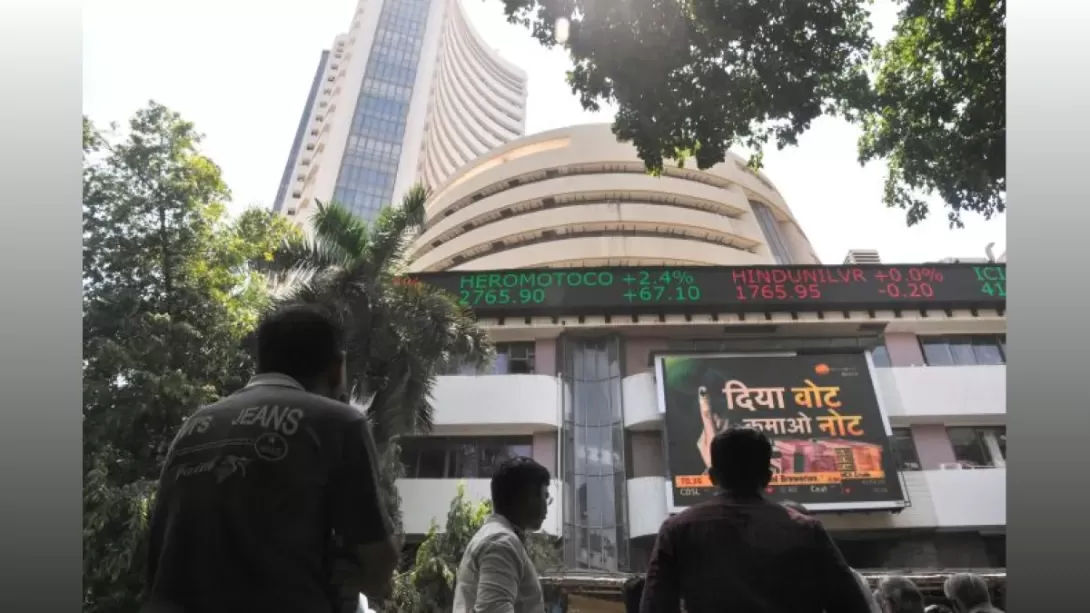
The National Stock Exchange of India (NSE), the country’s largest equity trading platform, reported a robust 47% year-on-year increase in net profit for the fiscal year ending March 2025, reaching Rs. 12,188 crore. This performance was achieved despite a 13% decline in quarterly revenues for Q4, which stood at Rs. 4,397 crore. The exchange’s board declared a final dividend of Rs. 35 per share, including a one-time special payout. NSE’s tax contributions crossed Rs. 59,000 crore, with the cash and derivatives segments jointly generating significant securities transaction tax revenues. Adjusted profit before tax rose 17%, highlighting solid core operational growth.
Quarterly Results: Profit Rises Amid Revenue Pullback
In the final quarter of FY25, the NSE posted a consolidated net profit of Rs. 2,650 crore, marking a 7% increase from Rs. 2,488 crore recorded in the same period the previous year. This gain comes despite a revenue contraction of 13%, with total income declining to Rs. 4,397 crore from Rs. 5,080 crore in Q4 FY24.
The dip in revenue reflects a moderation in trading activity and lower volatility, common during periods of market consolidation. However, the profit uptick underscores the exchange’s efficient cost controls and non-trading revenue streams, which have partially offset the top-line softness.
Full-Year Financials Highlight Underlying Strength
For the fiscal year ended March 2025, NSE recorded a consolidated net profit of Rs. 12,188 crore, a sharp rise of 47% over the previous year. This performance was supported by a 17% year-on-year increase in total income, which reached Rs. 19,177 crore.
Excluding one-time items—such as gains from divestments, regulatory settlements, and SGF contributions—the normalized consolidated profit before tax rose 17% to Rs. 14,895 crore. This metric provides a clearer view of the exchange's underlying operational health and suggests resilient growth in its core businesses.
The board’s declaration of a final dividend of Rs. 35 per equity share, which includes a special dividend of Rs. 11.46, is both a reflection of the exchange’s strong liquidity position and a gesture of goodwill toward its shareholders.
Massive Contribution to Public Finances
Beyond financial performance, the NSE played a significant role in supporting the government’s revenue base. The exchange’s total contribution to the exchequer in FY25 stood at Rs. 59,798 crore, spanning various statutory levies.
Of this amount, Rs. 48,439 crore came from Securities Transaction Tax (STT) and Commodities Transaction Tax (CTT), with 58% generated by cash market activity and the remaining 42% from equity derivatives. Additional contributions included Rs. 3,772 crore in stamp duty, Rs. 1,804 crore in SEBI fees, Rs. 3,831 crore in corporate income tax, and Rs. 1,952 crore in Goods and Services Tax (GST).
Such figures not only underscore NSE’s operational scale but also its role as a pivotal institution in India's capital markets ecosystem and fiscal framework.
Strategic Outlook: Navigating Evolving Market Terrain
Despite the sequential quarterly revenue dip, NSE’s full-year performance highlights a resilient business model built on diversified revenue streams, strong operational discipline, and a robust market infrastructure.
Looking ahead, sustained investor participation, increasing retail activity, and broader digitization of financial services may continue to drive growth. However, factors such as regulatory changes, global macroeconomic uncertainties, and interest rate cycles will remain crucial variables in shaping exchange activity and profitability.
In an environment where capital markets are increasingly central to wealth creation and capital allocation in India, the NSE appears well-positioned to maintain its leadership while innovating to adapt to new demands.
Comments