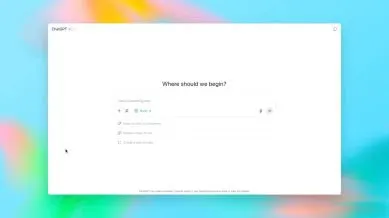
OpenAI has rolled out a new feature, ‘Study Mode’, for ChatGPT users in India, aimed at transforming the way students and lifelong learners interact with artificial intelligence. The tool offers personalized, multilingual, and interactive educational assistance free of cost, positioning itself as a smart companion for learners across academic levels and disciplines. With its intuitive interface and real-time responsiveness, ‘Study Mode’ supports diverse learning preferences, from step-by-step problem solving to language practice and test prep. The move aligns with India’s fast-growing digital education landscape and OpenAI’s commitment to democratizing access to high-quality learning tools.
---
A Leap Forward in AI-Powered Education
In an ambitious move to democratize education, OpenAI has launched ‘Study Mode’ for ChatGPT users in India, expanding the platform’s utility beyond casual conversation into the domain of structured, student-focused learning. Designed to function as a dynamic digital tutor, the new feature allows users to engage in deep, subject-specific queries across science, mathematics, literature, history, and beyond—tailored to individual learning paces and preferences.
Unlike conventional AI search tools, Study Mode is built for interactivity. Users can ask follow-up questions, request clarification, or seek explanations in multiple Indian languages, making it accessible to a wide cross-section of the population.
---
How It Works: Smart, Simple, and Seamless
Study Mode functions as an overlay within the ChatGPT interface, requiring no additional downloads or subscriptions. Once activated, it customizes responses with an educational tone, offering explanations that align with a learner’s proficiency level. For instance, a high school student can request algebraic solutions with visual walkthroughs, while a college student might use the mode to interpret legal texts or explore philosophical theories.
The multilingual functionality extends support to key regional languages such as Hindi, Tamil, Bengali, Kannada, and more, ensuring linguistic inclusivity. Voice-based interaction and visual outputs enhance usability, especially for younger users and those with different learning styles.
---
Use Cases: From Homework Help to Exam Prep
The tool is highly versatile. Students can use it for clarifying difficult concepts, writing essays, preparing for competitive exams like JEE or UPSC, or even translating texts. Unlike static content, the adaptive learning flow means ChatGPT can shift from surface-level assistance to in-depth tutoring within seconds, depending on how the user drives the conversation.
Professionals and adult learners aren’t left out either. Whether it’s brushing up on business terminology, learning a new language, or understanding data analytics, Study Mode has something to offer beyond school curricula.
---
India's Digital Learning Boom and OpenAI’s Strategic Timing
The launch comes at a time when India’s edtech ecosystem is rapidly evolving, bolstered by increased smartphone penetration, government digital literacy initiatives, and a growing appetite for personalized learning. By offering this advanced AI tool at no cost, OpenAI is not only extending its footprint in one of the world’s largest education markets, but also actively contributing to closing the knowledge gap for underserved learners.
This also strategically places OpenAI ahead of competitors in the AI education space, as it becomes one of the first to offer such an expansive feature suite with built-in cultural and linguistic context.
---
A New Companion for Learners of All Ages
As students and educators navigate increasingly hybrid learning environments, tools like ChatGPT’s Study Mode could play a pivotal role in how knowledge is consumed and understood. The tool’s adaptability to multiple curricula, seamless UI, and commitment to equity make it a compelling innovation for India’s digital future.
OpenAI’s latest release isn’t just an upgrade—it’s a signal of what intelligent, personalized education could look like in the age of AI, tailored to learners who are as diverse as the country itself.
Comments