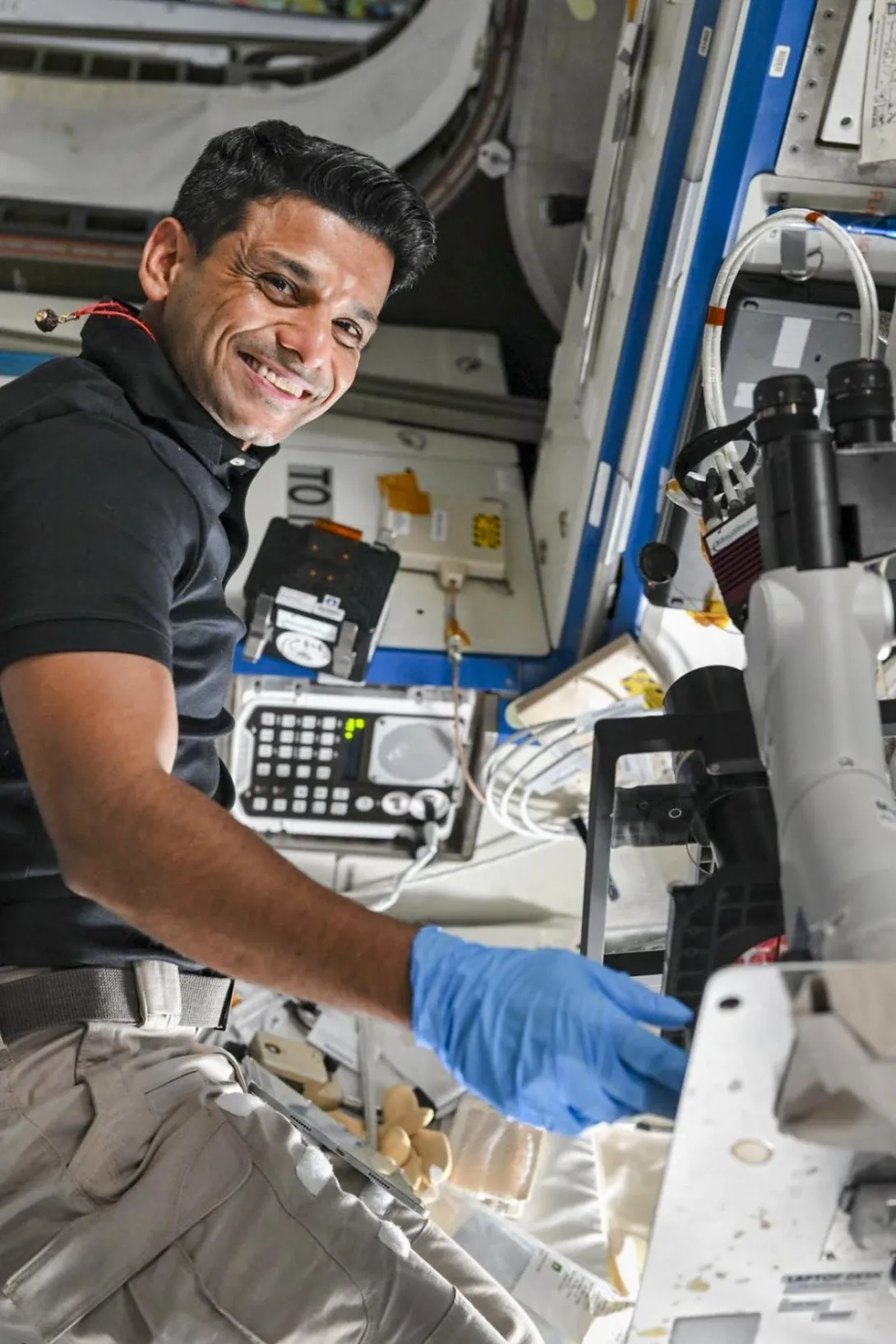
In a remarkable blend of scientific curiosity and agricultural innovation, astronaut Shubhanshu Shukla has embarked on an ambitious experiment by cultivating methi (fenugreek) and moong (green gram) seeds aboard his space mission. The initiative aims to deepen our understanding of plant growth under microgravity conditions, opening new frontiers for food sustainability in long-duration space exploration. Shukla’s effort not only showcases India’s advancing capabilities in space biology but also holds promise for future missions, where growing fresh produce beyond Earth could become essential. The success of these experiments may fundamentally alter how astronauts nourish themselves on extended journeys through the cosmos.
Seeds of Innovation: Farming Beyond Earth
Shubhanshu Shukla’s decision to sow methi and moong seeds in space is more than a symbolic gesture; it represents a strategic step in addressing one of the most critical challenges of deep space travel—food security. Unlike Earth, where gravity facilitates nutrient circulation and water absorption in plants, space presents a unique set of hurdles. Understanding how legumes and leafy greens adapt to microgravity is essential for designing sustainable life-support systems for missions to the Moon, Mars, and beyond.
This pioneering experiment is designed to observe germination patterns, root behavior, and photosynthetic efficiency under weightless conditions, providing crucial data for future bio-regenerative life support.
India’s Growing Role in Space Agriculture
Shukla’s initiative underscores India’s rising stature in space science, particularly in the emerging field of extraterrestrial agriculture. While global agencies like NASA and ESA have long explored crop cultivation aboard the International Space Station, India’s targeted focus on indigenous staples such as methi and moong reflects a culturally resonant approach. These crops are not only nutrient-rich but also relatively resilient, making them suitable candidates for controlled environment agriculture in orbit.
By prioritizing species familiar to Indian dietary needs, researchers hope to build tailored nutritional frameworks for Indian astronauts who may participate in extended lunar or interplanetary missions in the coming decades.
Implications for Earth and Future Space Travel
The ramifications of Shukla’s experiment extend well beyond space. Insights gleaned from plant growth under microgravity can inform agricultural practices on Earth, especially in regions grappling with extreme climatic stress. Techniques developed to maximize plant yield in confined and harsh environments may translate into innovations for vertical farming and precision agriculture.
Meanwhile, for space exploration, the ability to cultivate food on-site drastically reduces the logistical burden of transporting supplies, paving the way for more self-sufficient crews. Fresh produce also enhances psychological well-being, an often-overlooked factor in the success of long-duration missions.
Looking Ahead: Harvesting Hope Among the Stars
As Shukla continues to monitor the progress of his tiny green laboratory, scientists and enthusiasts worldwide watch with anticipation. His work embodies the spirit of exploration that unites human curiosity with practical problem-solving—using the vastness of space as both a laboratory and a classroom. If these experiments flourish, they could mark a historic milestone, signaling humanity’s growing ability not just to survive but to thrive beyond Earth.
Comments