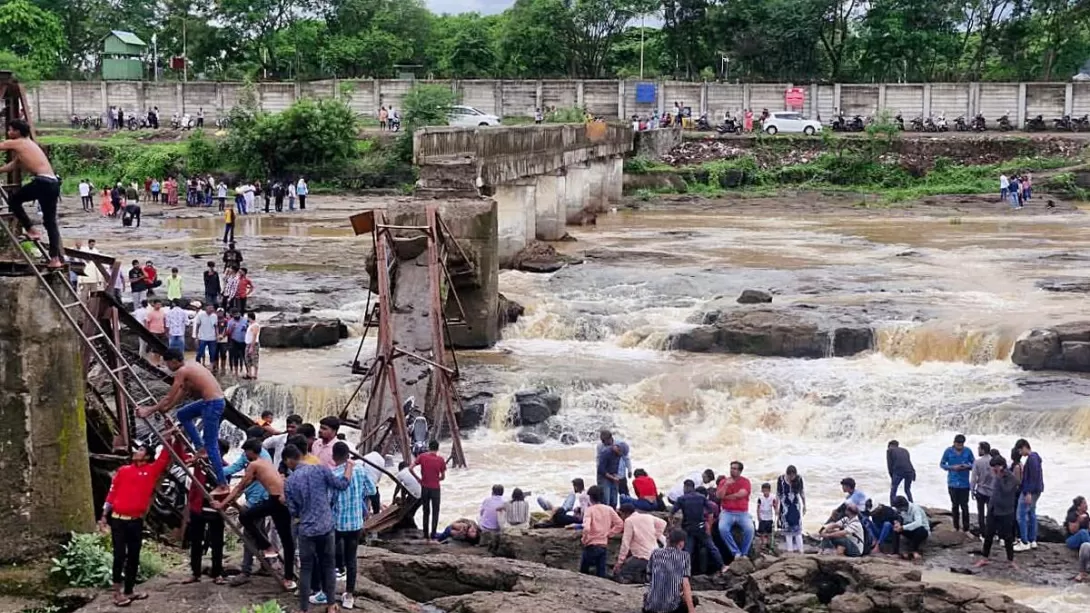
Rescue operations at the Indrayani river bridge collapse site in Pune’s Kundamala officially concluded on Monday after the National Disaster Response Force (NDRF) confirmed that all missing individuals had been located. The collapse of a decades-old iron pedestrian bridge, overloaded with tourists during monsoon rains, resulted in four deaths and over 50 injuries. Government officials have pledged financial compensation to the victims' families and coverage of medical expenses for the injured. The tragedy has reignited scrutiny over infrastructure maintenance, regulatory lapses, and the misuse of ageing public structures across India, particularly in high-footfall tourist zones.
Tragedy Strikes in Kundamala
The fatal incident occurred at the Indrayani river in Pune district’s Maval taluka, where a pedestrian bridge collapsed under the weight of over 150 tourists. Located 30 kilometers from Pune near Talegaon Dabhade, the Kundamala site is a popular but relatively underregulated destination, known for its scenic waterfalls, natural gorges, and seasonal whirlpools.
The iron bridge—originally intended for pedestrian use only—had become a thoroughfare for two-wheelers, compromising its structural integrity. The influx of tourists during the monsoon, drawn by the river’s rising volume and picturesque landscape, led to severe overcrowding.
Rescue Operation Concludes
According to the NDRF’s official communication, the operation was called off late Sunday night after all missing persons were accounted for. “As per directions of the district administration, operations have been closed,” the agency noted in its report.
District Collector Jitendra Dudi confirmed that the rescue team responded within 20 minutes of receiving the initial alert. While four lives were lost, around 50 individuals sustained injuries, 18 of whom required hospitalization.
Government Response and Compensation
In response to the tragedy, the Maharashtra state government announced an ex gratia payment of Rs. 5 lakh to the families of the deceased. Additionally, the administration has committed to covering the medical expenses for all injured victims.
The swift deployment of emergency services was praised, but questions remain over why preventive measures failed, especially after the area was flagged by authorities just days earlier.
Neglected Warnings and Infrastructure Gaps
The bridge, reportedly over 30 years old, had long surpassed its design life and was not engineered to withstand motorized traffic. Minister for Water Resources Girish Mahajan stated that tenders for a new bridge had been sanctioned but construction was postponed due to the monsoon season.
The tragedy follows a prohibitory order issued last week by the district collector, urging residents and tourists to avoid water bodies during the rains—a warning that went largely unheeded.
Broader Implications and the Need for Oversight
The collapse is the latest in a series of infrastructure-related accidents across India that highlight the dangers of aging civic assets, regulatory oversight failures, and inadequate crowd control at popular tourist sites.
Experts emphasize the need for regular audits of public infrastructure, stricter enforcement of usage guidelines, and real-time risk monitoring during high-traffic periods, particularly in vulnerable geographies like riverside locations and hilly terrains.
Conclusion
While the NDRF’s swift action brought closure to the rescue phase, the bridge collapse at Kundamala raises urgent questions about infrastructure safety, public awareness, and policy execution. As India continues to develop its tourism sector, the protection of both heritage and human life must be balanced through proactive governance and transparent accountability.
Comments