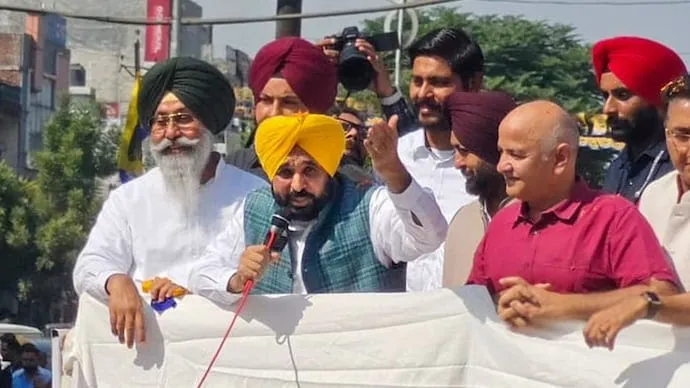
The Tarn Taran bypoll has emerged as a revealing snapshot of Punjab’s shifting political landscape, exposing fractures that extend far beyond a single constituency. The result highlights rising voter disenchantment, the reconfiguration of traditional vote banks, and the evolving dynamics between major political parties struggling to regain relevance. While the ruling leadership sought validation of its governance model, opposition groups viewed the contest as a test of their revival strategies. The outcome underscores widening ideological divides, the resurgence of local power structures, and the intensifying challenges facing Punjab’s political establishment as it navigates economic stress, agrarian concerns, and identity-driven debates.
---
A Contest That Became a Political Barometer
What began as a routine bypoll quickly transformed into a symbolic battle for Punjab’s competing political narratives. Tarn Taran—an area known for strong community-driven mobilization and high political engagement—became a testing ground for assessing how voters perceive governance, development commitments, and shifting alliances.
The result signaled a recalibration of ground-level political sentiment, challenging assumptions held by dominant parties about their standing among rural and semi-urban voters.
---
Voter Discontent and Weakening Traditional Strongholds
One of the clearest takeaways from the bypoll is the erosion of loyalty toward established political blocs. Analysts point to multiple undercurrents:
Deepening frustration over employment stagnation
Persistent agrarian distress
Localized dissatisfaction with public services
Growing skepticism toward political promises
This fragmentation has weakened traditional strongholds, enabling smaller or regionally focused groups to influence outcomes. Tarn Taran’s verdict suggests that voters are increasingly prioritizing local credibility over party lineage.
---
The Shifting Strategies of Major Political Parties
For mainstream parties, the bypoll served as a stress test of their evolving strategies. Some sought to consolidate rural support through welfare schemes, while others attempted to leverage anti-incumbency to regain lost ground.
However, the mixed response at the ballot box indicates that messaging alone may no longer suffice. Voters appear to be examining leadership performance, constituency-level engagement, and long-term vision rather than relying on legacy-driven loyalties.
---
A Reflection of Punjab’s Larger Sociopolitical Landscape
Beyond electoral arithmetic, the Tarn Taran result shines a spotlight on deeper societal shifts. Punjab is grappling with interconnected challenges—economic instability, shifting youth aspirations, and debates surrounding identity and governance.
The bypoll outcome mirrors these tensions, suggesting that political narratives must adapt to an electorate that is increasingly vocal, informed, and pragmatic. The rise of personality-driven politics and the renewed relevance of local influencers further complicate the state’s political map.
---
Lessons for Parties Ahead of Larger Electoral Battles
Parties now face clear imperatives:
Strengthen grassroots organizational structures
Address economic and agricultural concerns with concrete policy action
Communicate consistently and transparently with voters
Evolve beyond symbolic politics and engage with emerging social priorities
Tarn Taran’s verdict is not merely a constituency-level message—it is an early indicator of how Punjab’s electorate may reshape upcoming electoral cycles.
---
Conclusion: A Warning Sign and a Window of Opportunity
The Tarn Taran bypoll result is both a warning and an opportunity. It warns political parties that complacency and outdated strategies will be costly. At the same time, it offers a window for those willing to understand ground sentiment, respond to public concerns, and build fresh political capital.
As Punjab moves toward future elections, the lessons from Tarn Taran will likely shape campaign strategies, leadership decisions, and policy narratives across the state.
Comments