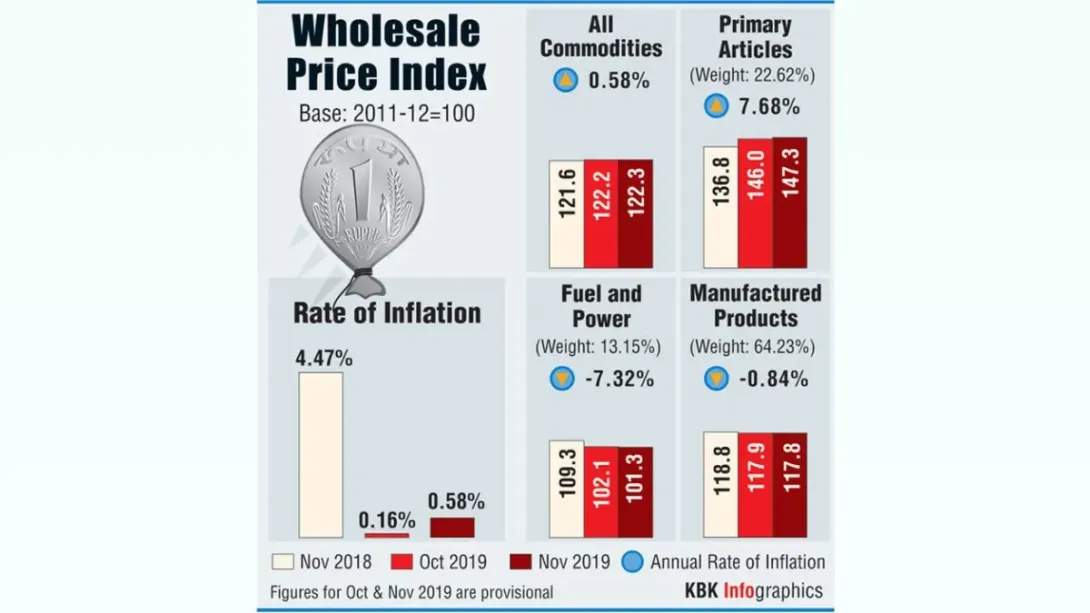
India’s wholesale price index (WPI) recorded a contraction of 0.32% in November, signaling easing price pressures at the wholesale level. The decline, driven by softer food and fuel prices, offers temporary relief for producers and businesses while highlighting ongoing volatility in supply-side inflation dynamics. Analysts suggest that while consumer price inflation remains a key policy focus, trends in WPI provide early indicators of input cost movements that could influence corporate margins and pricing strategies. The data underscores the importance of monitoring both wholesale and retail inflation for a comprehensive view of India’s macroeconomic environment, especially in sectors sensitive to commodity fluctuations.
Wholesale Inflation Sees Modest Contraction
The WPI index for November fell to -0.32%, marking a continuation of subdued wholesale price pressures observed in recent months. Analysts attribute the contraction primarily to declining prices in the food basket, including vegetables, cereals, and pulses, alongside lower fuel and power costs.
This trend suggests that producers are facing easing input costs, which could eventually translate into moderated retail prices if the deflationary pressures persist.
Sectoral Contributions
- Food Articles: Prices in this category softened, particularly in vegetables and edible oils, reflecting both seasonal availability and favorable supply conditions.
- Fuel and Power: Crude oil-linked fuels and electricity costs declined, contributing to a significant drag on overall WPI inflation.
- Manufactured Products: Prices in industrial goods remained relatively stable, indicating that supply chain pressures have not intensified despite global commodity volatility.
Sectoral dynamics point to a mixed outlook, with temporary relief in raw material costs counterbalanced by potential volatility in global commodity markets.
Implications for Monetary and Business Strategies
While WPI primarily reflects wholesale-level price changes, it serves as a leading indicator for corporate input costs and profit margins. Businesses in manufacturing, logistics, and food processing are likely to adjust pricing strategies in response to easing wholesale inflation.
For policymakers, the negative WPI reading provides room to balance growth and inflation management, even as retail inflation remains a key concern for household consumption and central bank policy decisions.
Outlook
Economists caution that the decline in WPI may be transitory, given ongoing uncertainty in global commodity markets, energy prices, and seasonal agricultural supply. Continued monitoring of wholesale prices will be critical to gauge inflationary pressures and guide both corporate and monetary policy strategies in the coming months.
This moderate easing in WPI highlights the complex interplay between supply-side dynamics, global price trends, and domestic consumption patterns shaping India’s inflation trajectory.
Comments