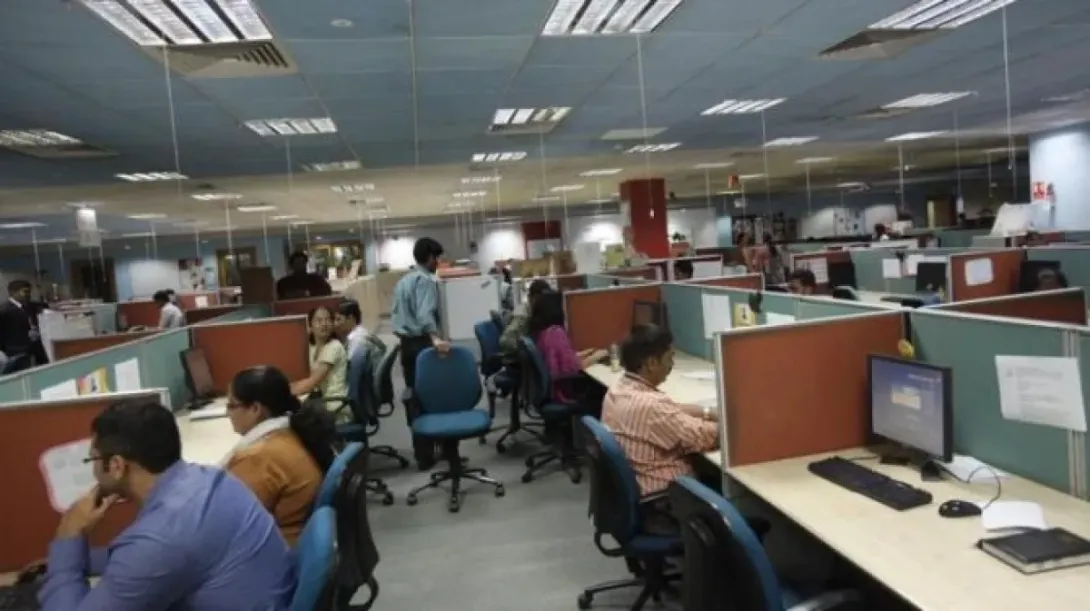
Flexible workspace provider IndiQube Spaces posted a net loss of Rs. 17 crore for the quarter ended December, reflecting elevated expansion costs and higher operating expenses despite steady demand for managed office solutions. The performance underscores the capital-intensive nature of scaling co-working platforms in a competitive commercial real estate environment. While occupancy levels and enterprise client acquisitions remained stable, margin pressures persisted due to new center launches and infrastructure investments. Industry analysts view the quarterly loss as transitional, linked to growth-oriented spending, rather than structural weakness in India’s evolving flexible workspace ecosystem.
Quarterly Performance Reflects Growth-Linked Costs
IndiQube Spaces reported a consolidated net loss of Rs. 17 crore during the December quarter, highlighting the financial impact of rapid capacity expansion and operational scaling. The company has been investing aggressively in new centers, technology integration and enterprise-grade infrastructure to strengthen its market position.
Revenue growth, while steady, was offset by higher lease rentals, fit-out expenses and employee costs associated with new facility rollouts. Such upfront expenditures are typical in the flexible workspace sector, where scale and occupancy stabilization determine long-term profitability.
Management indicated that the current financial trajectory aligns with its expansion roadmap.
Demand for Flexible Workspaces Remains Resilient
Despite the quarterly loss, underlying demand trends in India’s managed office space market remain encouraging. Enterprises continue to adopt hybrid work models, increasing reliance on flexible, technology-enabled work environments.
IndiQube Spaces has focused on attracting large corporate clients seeking customized, scalable office solutions. This enterprise-centric strategy often involves longer contract tenures, which can enhance revenue visibility once occupancy stabilizes.
Industry observers note that flexible workspace penetration in India is still evolving, leaving room for sustained long-term growth.
Competitive Landscape and Market Dynamics
The co-working and managed office segment has become increasingly competitive, with established players and new entrants vying for prime commercial real estate locations. In such an environment, strategic differentiation through service quality, digital infrastructure and client experience becomes critical.
IndiQube’s emphasis on integrated facility management and tailored workspace solutions positions it within the premium segment of the market. However, competitive pricing pressures and rising rental commitments continue to influence margin performance.
Analysts suggest that operational efficiency and disciplined cost control will be key determinants of profitability in the coming quarters.
Path to Profitability and Capital Discipline
Achieving scale-driven profitability remains central to the company’s strategy. As newly launched centers mature and occupancy rates improve, operating leverage is expected to strengthen margins.
Financial prudence, including balanced lease agreements and phased expansion, will be essential in managing cash flows. In capital-intensive real estate models, sustainable growth depends on maintaining liquidity and minimizing debt exposure.
Market experts emphasize that while short-term losses may concern investors, long-term value creation hinges on consistent occupancy growth and efficient asset utilization.
Outlook for the Flexible Workspace Sector
India’s commercial real estate sector continues to adapt to changing workplace dynamics. Hybrid work arrangements, technology-enabled offices and cost optimization initiatives by corporates are reshaping demand patterns.
Flexible workspace operators that can combine scalability with operational discipline are likely to benefit from structural shifts in office utilization. Government infrastructure investments and urban development initiatives may further stimulate demand for managed office solutions.
IndiQube Spaces’ December quarter performance reflects the transitional costs of expansion rather than a contraction in demand. As the company progresses toward occupancy stabilization and cost rationalization, investors will closely track its path to sustainable profitability.
Comments