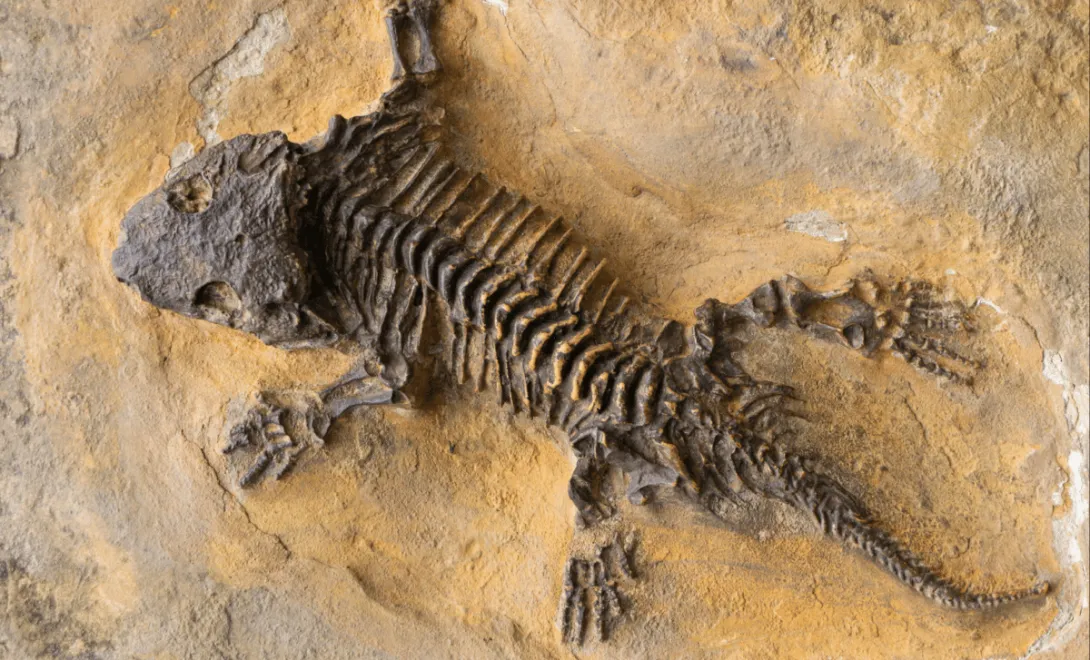
A groundbreaking study has uncovered the earliest known evidence of large terrestrial predators actively hunting herbivorous prey, reshaping our understanding of prehistoric ecosystems. Researchers analyzed fossilized remains and bite marks dating back millions of years, revealing sophisticated predatory behavior and ecological interactions previously thought to emerge later. The findings carry implications for evolutionary biology, paleoecology, and conservation modeling, illustrating how apex predators shaped biodiversity and trophic dynamics. Beyond academic insight, the discovery has potential economic impact, fueling tourism to fossil sites, scientific exhibitions, and educational initiatives valued at several Rs. crores, while advancing global interest in paleontology and natural history.
Details of the Discovery
The research team examined fossilized bones showing puncture marks, fractures, and wear patterns indicative of predation rather than scavenging. These findings suggest that large carnivorous species were actively pursuing and killing herbivorous animals, demonstrating advanced hunting strategies far earlier than previously documented. Experts assert that this shifts timelines for the evolution of predator-prey dynamics and offers fresh perspectives on ecological structuring in prehistoric landscapes.
Implications for Evolutionary Biology
By documenting active predation, the study provides key insights into the selective pressures that influenced the evolution of both predators and prey. Traits such as agility, social hunting behavior, and defensive adaptations in herbivores can now be reinterpreted in light of earlier predator-prey interactions. Evolutionary biologists suggest that this evidence underscores the long-term role of apex predators in shaping morphology, behavior, and species survival strategies.
Paleoecology and Ecosystem Dynamics
The discovery enriches understanding of ancient ecosystems, indicating that complex food webs existed far earlier than assumed. Apex predators are critical in regulating herbivore populations, maintaining ecological balance, and influencing biodiversity. Paleoecologists note that integrating these findings into ecological models can improve predictions of species interactions, both in historical contexts and contemporary conservation planning.
Economic and Educational Impact
Such discoveries often stimulate interest in museums, fossil parks, and educational programs, generating measurable economic activity. Tourism to excavation sites, guided fossil tours, and interactive exhibits can collectively produce revenues estimated at several Rs. crores. Additionally, public engagement initiatives foster STEM education and support scientific literacy, highlighting the commercial and societal value of paleontological research.
Conclusion
This study fundamentally alters our understanding of prehistoric life, demonstrating that large predators were actively hunting herbivores much earlier than previously believed. Beyond academic significance, the findings illuminate evolutionary processes, ecosystem dynamics, and potential economic opportunities linked to science tourism and educational programming. As researchers continue to investigate these ancient interactions, the study reinforces the enduring relevance of paleontology in connecting human curiosity, ecological knowledge, and commercial engagement in a scientifically informed society.
Comments