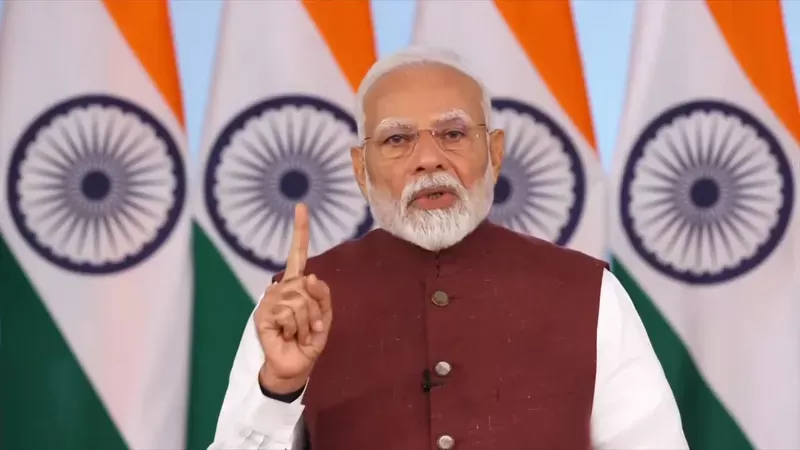
Prime Minister Narendra Modi announced the inauguration of critical infrastructure projects worth Rs. 46,000 crore in Jammu and Kashmir on June 6, a development poised to reshape the region's connectivity and economic landscape. Central to these projects is the Udhampur-Baramulla-Srinagar Rail Link (USBRL), which promises all-weather access and enhanced transportation efficiency. The launch of Vande Bharat trains between Shri Mata Vaishno Devi Katra and Srinagar is expected to invigorate spiritual tourism and generate substantial employment opportunities. Landmark engineering marvels such as the Chenab and Anji bridges underscore the project's scale and ambition, promising enduring social and economic benefits for the region.
Pivotal Infrastructure Milestone for Jammu & Kashmir
On June 6, Prime Minister Narendra Modi marked a historic occasion for Jammu and Kashmir by inaugurating a series of infrastructure projects valued at Rs. 46,000 crore. These developments are anticipated to catalyze economic growth, improve mobility, and deepen integration of the region with the rest of India. The Udhampur-Baramulla-Srinagar Rail Link (USBRL) stands out as a transformational project, providing reliable, all-weather connectivity across some of India’s most challenging terrains.
The Udhampur-Baramulla-Srinagar Rail Link: A Game Changer
The USBRL project, spanning several hundred kilometers, represents a critical link in the region's transportation infrastructure. Its all-weather functionality will alleviate logistical bottlenecks, facilitate the movement of goods and passengers, and foster regional trade. The introduction of the Vande Bharat Express, connecting Shri Mata Vaishno Devi Katra with Srinagar, is poised to boost spiritual tourism significantly. This enhanced connectivity not only benefits pilgrims but also stimulates ancillary sectors such as hospitality, retail, and local craftsmanship, creating diverse livelihood opportunities.
Engineering Marvels: Chenab and Anji Bridges
Integral to the USBRL’s completion are two engineering landmarks: the Chenab Bridge and the Anji Bridge. The Chenab Bridge, touted as the tallest railway bridge globally, exemplifies India’s advanced civil engineering capabilities and resolves the challenges posed by the region’s mountainous topography. Meanwhile, the Anji Bridge holds the distinction of being India’s first cable-stayed rail bridge in a similarly difficult terrain. Together, these structures symbolize not only technical ingenuity but also a commitment to overcoming geographic obstacles to connect Jammu and Kashmir seamlessly with the rest of the nation.
Political and Social Implications
Prime Minister Modi’s inauguration ceremony was prefaced by active coordination with local leaders, including Jammu and Kashmir’s Chief Minister Omar Abdullah, underscoring the importance of collaboration in delivering these projects. Abdullah’s visit to the Chenab Bridge and his subsequent remarks emphasize the regional anticipation and pride attached to this infrastructural leap.
Beyond the tangible benefits of connectivity, these projects carry symbolic weight, reinforcing national integration and the promise of socio-economic upliftment. The infrastructure expansion is expected to fortify Jammu and Kashmir’s position as a dynamic hub for tourism, trade, and culture.
Conclusion
The launch of Rs. 46,000 crore infrastructure initiatives in Jammu and Kashmir represents a watershed moment for the region’s development trajectory. By bridging physical divides with projects like the USBRL and deploying state-of-the-art engineering solutions, India is laying the foundation for sustainable economic progress and social cohesion in one of its most strategically significant territories. The ensuing increase in connectivity, employment, and tourism will undoubtedly contribute to the broader objective of inclusive growth and regional stability.
Comments