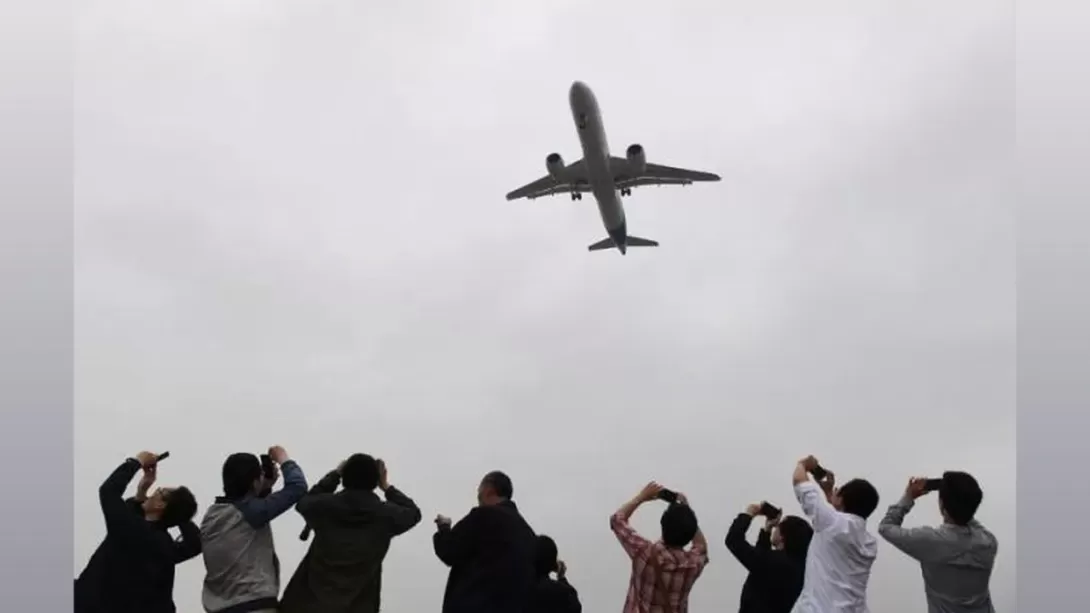
An IndiGo flight en route to Leh was compelled to return to Delhi on Thursday morning after encountering a technical malfunction mid-flight. The Airbus A320, operating as flight 6E2006, had been airborne for more than two hours before it made a precautionary return to the national capital. While no injuries or onboard emergencies were reported, the incident underscores the aviation industry's ongoing challenges with operational safety and equipment reliability. Sources close to the matter confirmed the issue was technical in nature, although further details have not been officially disclosed by the airline.
Technical Setback Forces IndiGo Aircraft to Abort Flight
On Thursday morning, passengers aboard an IndiGo flight headed to Leh were met with an unexpected detour when the aircraft was forced to return to Delhi due to a technical irregularity. According to sources familiar with the matter, the Airbus A320, bearing flight number 6E2006, experienced an unspecified malfunction that prompted the crew to initiate a turnaround after remaining airborne for more than two hours.
The incident was tracked in real-time by aviation enthusiasts and professionals via Flightradar24.com, which showed the aircraft circling before diverting back to the departure airport.
Operational Response and Passenger Safety
While IndiGo has not issued an official statement regarding the precise nature of the technical fault, internal sources confirmed that the issue did not pose an immediate threat to passenger safety. The return was executed as a “precautionary measure,” adhering to standard operating protocols established by the Directorate General of Civil Aviation (DGCA).
All passengers were safely disembarked upon arrival in Delhi, and no injuries were reported. Alternative arrangements for onward travel to Leh were either made or communicated to the passengers following the disruption.
Aviation Safety: A Persistent Challenge
Though such events are uncommon, they are not unprecedented. Commercial aviation, especially in regions with complex topographies like Ladakh, often necessitates heightened operational scrutiny. The Leh route, in particular, demands precise aircraft performance due to its high-altitude location and surrounding mountainous terrain.
In this context, the return of flight 6E2006 to Delhi can be viewed as a testament to the aircraft's fail-safe systems and the crew's professionalism in managing in-flight anomalies without compromising passenger welfare.
Implications for IndiGo and Broader Aviation Ecosystem
IndiGo, India’s largest airline by market share, has built a reputation for reliability and efficiency. However, repeated technical disruptions—especially involving widely used aircraft models like the A320—could raise questions around maintenance protocols, fleet management, and manufacturer oversight.
The Directorate General of Civil Aviation is expected to review the incident in detail. If a pattern emerges, further regulatory scrutiny may be imposed on IndiGo or Airbus operations in India, depending on the root cause analysis.
Conclusion
As air travel continues to recover and expand in the post-pandemic era, passenger safety remains non-negotiable. While Thursday’s incident involving IndiGo’s Delhi-Leh flight concluded without casualties or serious complications, it highlights the need for constant vigilance and robust infrastructure in India’s aviation sector. Transparency in technical audits and proactive communication with stakeholders will be critical to maintaining public trust and operational integrity in the months ahead.
Comments