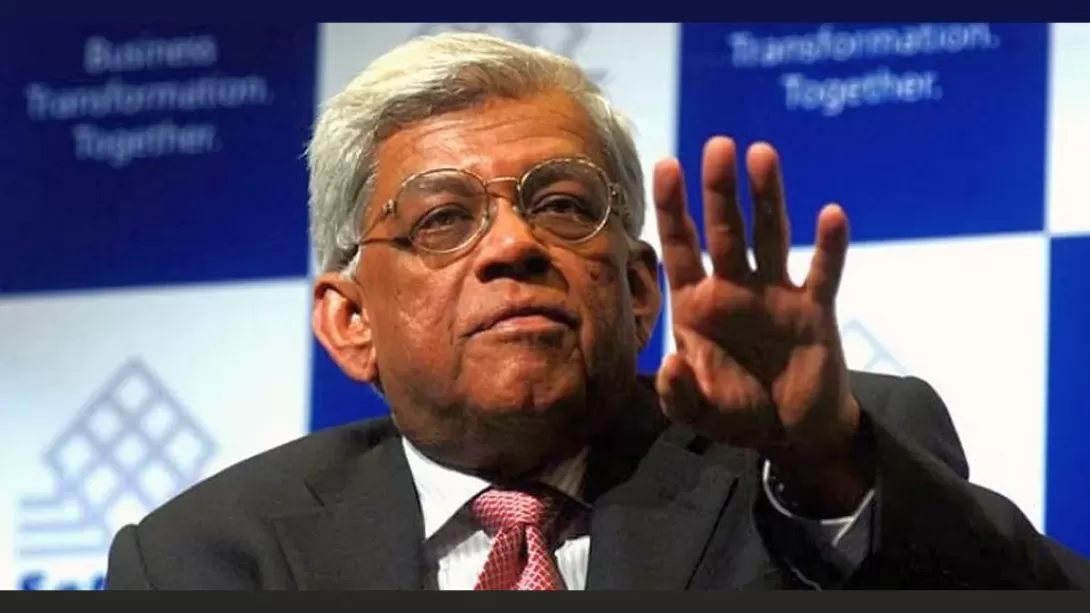
In a rare revelation, veteran banker Deepak Parekh disclosed that ICICI Bank once offered to acquire HDFC Ltd — a proposal that was ultimately declined in favor of institutional independence. The disclosure comes in the wake of HDFC Ltd’s historic reverse merger with its banking subsidiary, HDFC Bank, a union formalized in July 2023, creating India’s largest private sector lender. Parekh shed light on the regulatory pressures that catalyzed the merger and emphasized the strategic importance of consolidation in India’s banking sector, urging financial institutions to consider growth through acquisitions to strengthen resilience and global competitiveness.
A Legacy at the Crossroads: HDFC’s Rejected Acquisition
In a candid conversation made public via a YouTube interaction with former ICICI Bank MD and CEO Chanda Kochhar, Deepak Parekh, the former chairman of HDFC Ltd, shared a pivotal moment in Indian banking history — one that almost was. According to Parekh, ICICI Bank once extended an informal offer to take over HDFC Ltd, the mortgage giant it had helped seed decades ago.
“You said ICICI started HDFC. ‘Why don’t you come back home?’ That was your offer,” Parekh recounted. Despite the sentiment, he respectfully turned it down, citing concerns over propriety and the sanctity of the HDFC brand. “It wouldn’t be fair or proper with our name and the bank and all,” he added, highlighting his commitment to institutional independence and legacy.
From Offer to Merger: The Path to India’s Largest Private Lender
Although HDFC Ltd resisted ICICI’s acquisition interest, the company eventually found its destiny intertwined with its own banking arm. On July 1, 2023, HDFC Ltd and HDFC Bank officially completed a reverse merger, marking the end of a 44-year era for the mortgage pioneer and the beginning of a new chapter in Indian finance.
Parekh described the merger as a regulatory-driven outcome rather than a strategic pursuit. He noted that the Reserve Bank of India (RBI) provided critical support throughout the process — not through special concessions or leniency, but through procedural clarity and approval facilitation. “RBI supported us and they pushed us into it to some extent and they helped us,” he explained.
The Strategic Rationale: Building Bigger, Better Banks
For Parekh, the merger was not just an institutional milestone — it was a national imperative. He emphasized that the consolidation was in the best interest of India’s financial sector, enabling the creation of large, resilient banks capable of meeting global standards and funding long-term development.
He added that the future of Indian banking lies in growth via mergers and acquisitions. “Indian banks must grow through acquisitions to become stronger,” he asserted, positioning consolidation not as an option, but as a necessity for systemic stability and global competitiveness.
Conclusion: A Glimpse Into What Could Have Been
Parekh’s revelation offers a striking glimpse into the inner workings of India’s banking landscape, where strategy, legacy, and regulation intersect. While the ICICI-HDFC alliance never came to fruition, the eventual integration of HDFC Ltd with HDFC Bank underscores the inevitability of scale in the modern financial ecosystem. As regulatory frameworks evolve and global financial pressures mount, India’s banking giants are poised to continue their consolidation journey — driven not only by necessity but by visionaries like Deepak Parekh, who understand when to hold the line and when to embrace change.
Comments