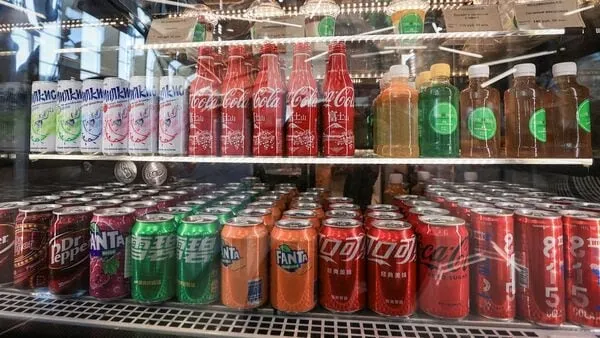
U.S. President Donald Trump has stirred national conversation after claiming that Coca-Cola has agreed to replace high-fructose corn syrup with real cane sugar in its beverages sold in the United States. The announcement, though lacking formal confirmation from the beverage giant, has ignited speculation across consumer and industry circles. If substantiated, the shift could mark a significant departure from decades-long sweetening practices, potentially reshaping U.S. soft drink formulations. With health-conscious consumers increasingly scrutinizing ingredients, this alleged pivot could signal deeper changes in how global food and beverage companies respond to evolving market sentiment.
---
Trump’s Statement Draws Industry Attention
Donald Trump’s assertion that Coca-Cola will begin using cane sugar instead of high-fructose corn syrup (HFCS) in its U.S. beverages has sparked curiosity and debate. While the company has yet to publicly verify the claim, the statement has already captured public attention due to its potential implications on both health trends and corporate strategy.
HFCS has long been a mainstay in American soft drinks, primarily because of its low cost and widespread availability. However, the ingredient has also been at the center of criticism from health advocates, who associate its overconsumption with rising rates of obesity, type 2 diabetes, and other metabolic disorders. A shift toward cane sugar could be interpreted as a significant response to such criticism.
---
The Economics Behind Sweeteners
For decades, the U.S. beverage industry has leaned heavily on high-fructose corn syrup due to favorable corn subsidies and lower import tariffs on domestically produced sweeteners. Cane sugar, by contrast, is more expensive and subject to greater price volatility due to trade dynamics and labor-intensive production.
If Coca-Cola were indeed moving toward cane sugar for U.S. markets, the company would likely face rising input costs. This could potentially be passed on to consumers through higher shelf prices unless mitigated by efficiencies elsewhere in the supply chain. However, the shift could also enhance brand image, aligning with consumer preferences for cleaner labels and more natural ingredients.
---
Historical Context and Global Precedents
Internationally, Coca-Cola already offers cane sugar-based products in several markets, including Mexico, where "Mexican Coke" has gained a loyal following in the U.S. for its perceived superior taste and natural formulation. Over the years, many U.S. consumers have shown a willingness to pay a premium for imported versions sweetened with cane sugar rather than corn syrup.
The company has also explored stevia and other low-calorie alternatives in response to shifting dietary trends. Thus, a return to traditional sweeteners could be viewed as both a nostalgic and strategic move to reconnect with health-conscious and heritage-seeking consumers.
---
Health, Regulation, and Market Trends
A reformulation on this scale would likely align with broader public health trends in the U.S. and abroad. Growing awareness of added sugar content has already driven beverage manufacturers to diversify product portfolios with zero-sugar or reduced-calorie alternatives. The Food and Drug Administration (FDA) has also tightened labeling requirements, putting further pressure on companies to be transparent about sweetener choices.
Should Coca-Cola make such a switch, it could compel other industry players — including PepsiCo and Dr Pepper — to revisit their own ingredient strategies. In a market where brand loyalty can shift rapidly, leading the charge on perceived health improvements could provide a first-mover advantage.
---
Strategic Implications and Consumer Sentiment
Beyond health and economics, such a change would carry substantial branding weight. Coca-Cola, a company deeply embedded in American cultural and commercial life, stands to benefit from any move perceived as authentic, traditional, or health-forward. The emotional resonance of cane sugar — often associated with “original” taste and nostalgia — could rejuvenate interest in its classic product line.
However, the feasibility of this transition hinges on supply chain readiness, cost structures, and regulatory clarity. Should Coca-Cola confirm Trump’s claim, it would likely be the result of extensive planning and phased rollout strategies.
---
Conclusion: A Sweet Shift or Political Hyperbole?
As of now, Donald Trump’s statement remains unverified by Coca-Cola. Still, the prospect of such a pivot has reignited a national discussion about what goes into our beverages — and why it matters. Whether this claim materializes or not, it reflects an evolving consumer landscape where ingredients are no longer just technical details, but focal points of public trust and brand value.
If Coca-Cola does indeed make the shift, it would not only redefine its product but also potentially reshape the sweetener standards for the entire U.S. beverage industry. Until then, the nation watches — one sip at a time.
Comments