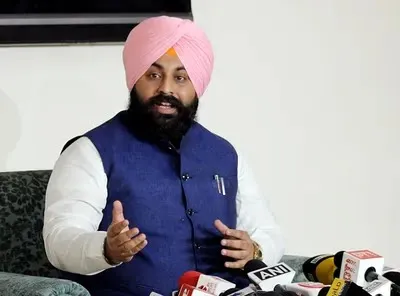
In a development that could have wide-ranging political and cultural implications, the Akal Takht—Sikhism’s highest temporal authority—has issued a summons to Punjab Education Minister Harjot Singh Bains and the head of the state’s language department. The summons follows a controversial event held in Srinagar, where Sikh religious symbolism was allegedly misrepresented. The Takht's intervention signals deep concern over the sanctity of religious traditions and the growing sensitivity around cultural portrayals in public institutions. As tensions simmer, this episode underscores the enduring relevance of faith-based institutions in India’s socio-political fabric.
---
Akal Takht Steps In to Safeguard Religious Sanctity
The Akal Takht, seated in the Golden Temple complex in Amritsar, has long served as the final word on matters of Sikh doctrine and conduct. When it speaks, its voice resonates far beyond religious boundaries, often influencing administrative and political spheres. Its recent decision to summon Punjab Cabinet Minister Harjot Singh Bains and the state’s language department director underscores the seriousness with which it views alleged misrepresentations that occurred during a public function in Srinagar.
Though the specifics of the event are yet to be disclosed officially, sources suggest that Sikh symbols, possibly including the sacred Khanda or the Nishan Sahib, were displayed in a manner that the Akal Takht considered inappropriate. The move to summon senior officials reflects the Takht’s broader effort to ensure that Sikh faith and symbols are treated with due reverence, especially in multicultural and politically sensitive regions like Kashmir.
---
Political and Administrative Ripples in Punjab
Harjot Singh Bains, a prominent face in the Punjab Cabinet, has found himself unexpectedly at the center of a religious controversy. While his role in the Srinagar event may have been administrative or ceremonial, the Takht’s notice indicates a perceived lapse in oversight or judgment. The involvement of the language department further complicates the situation, suggesting that the issue may have stemmed from content presentation or event planning that overlooked religious sensitivities.
The Punjab government, already navigating a complex political landscape, may now be forced to walk a tightrope—balancing deference to religious institutions with defense of its cabinet members. For Bains, the summons represents more than a religious reprimand; it is a public test of his leadership and cultural accountability.
---
Cultural Protocols in Multifaith Public Functions
The incident brings renewed attention to the role of cultural and religious protocols in government-sponsored events. In a country as diverse as India, where public functions often feature multiple faith representations, the risk of inadvertently offending religious sentiments remains high.
This episode could potentially lead to the formulation of stricter guidelines for such events. It may prompt the Department of Languages and other cultural bodies to consult religious scholars and community leaders more actively when organizing programs that involve sacred symbols or texts. The Akal Takht’s intervention could thus serve as a catalyst for long-overdue institutional reforms in how religious cultures are integrated into state-sponsored platforms.
---
Broader Implications for Center-State-Religion Dynamics
While the incident remains a regional matter on paper, its implications are national in tone. The Akal Takht’s assertion of authority over a political figure from a democratically elected state government is emblematic of the complex, often tense relationships between religious and administrative institutions in India.
As federal structures grapple with increasingly assertive religious bodies, this case may offer insights into how such dialogues will evolve in the future. Will religious institutions begin to play a more direct role in holding public officials accountable for cultural representation? Or will the state push back, drawing clear lines between governance and faith?
---
Conclusion: A Moment of Reflection, Not Confrontation
The Akal Takht’s summons should not be viewed merely as an act of censure, but as an invitation to introspection. In a society as spiritually rich and culturally layered as India’s, missteps are inevitable. What matters more is how those in power respond—whether with humility and a willingness to course-correct, or with defensiveness and disregard.
As the Punjab government prepares its response, this episode should serve as a reminder that public service requires not just efficiency and integrity, but also cultural literacy and emotional intelligence. For Harjot Bains and his colleagues, this is not just a summons from a religious seat—it is a moment to reaffirm the values of mutual respect and institutional harmony.
Comments