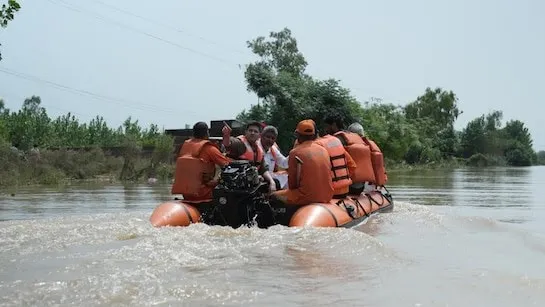
As devastating floods continue to disrupt life across Punjab, AAP leader Raghav Chadha visited severely affected districts to assess the damage and meet displaced families. His visit underscored both the urgency of immediate relief operations and the necessity of long-term rehabilitation strategies. Chadha pledged financial assistance for ongoing rescue efforts, promising that adequate funds would be allocated to ensure swift recovery. The disaster, which has inundated villages and destroyed farmland, not only calls for emergency intervention but also raises critical questions about climate preparedness, rural resilience, and infrastructure planning in one of India’s most agriculturally significant states.
---
Ground Situation in Flooded Districts
Chadha’s visit comes at a time when Punjab is grappling with one of its worst monsoon calamities in recent memory. Floodwaters have inundated vast stretches of farmland and residential areas, forcing thousands into relief camps. Rescue teams are working tirelessly to evacuate stranded villagers, yet challenges persist with damaged infrastructure, disrupted transport, and looming health hazards. The scale of displacement has amplified demands for both immediate relief and structured rehabilitation, particularly for vulnerable rural populations.
---
Pledge of Financial Support
During his visit, Chadha emphasized that funds would not be a constraint in managing the crisis. He assured residents that the government would release adequate financial support to strengthen relief operations, including the provision of food, medical aid, and temporary housing. His statement reinforced the administration’s commitment to prioritize human safety while also addressing the long-term financial burdens faced by flood-hit communities.
---
Agricultural Losses and Economic Impact
Punjab, often referred to as the food bowl of India, has seen extensive agricultural damage. Paddy fields, vegetable crops, and orchards have been submerged, raising concerns about farmer incomes and food supply chains. Early estimates suggest damages worth several hundred crores, a figure that could climb as assessments continue. For small and marginal farmers already facing high debt burdens, the floods pose a dual challenge: immediate loss of produce and longer-term risks to soil fertility and future yields. The government’s financial intervention will need to balance emergency compensation with broader economic recovery measures.
---
Infrastructure and Preparedness Challenges
The floods have revealed stark weaknesses in Punjab’s infrastructure and disaster preparedness. Fragile drainage systems, encroachments on natural waterways, and insufficient embankments have worsened the extent of flooding. Experts argue that without comprehensive reforms in water management and urban planning, such disasters will recur with greater intensity. Chadha’s assurances, while focused on relief, also signal the urgency for systemic upgrades to protect lives and livelihoods against climate-induced disruptions.
---
The Road Ahead
As relief funds are mobilized, the state faces the monumental task of rebuilding homes, restoring farmland, and repairing public infrastructure. For lasting recovery, Punjab will need to integrate sustainable flood management practices with economic resilience policies. This includes investing in forecasting technology, diversifying agricultural practices, and creating community-based preparedness programs. The floods have made it clear that disaster response cannot remain reactive—it must evolve into a proactive strategy rooted in resilience and sustainability.
---
Conclusion
Raghav Chadha’s assurance of financial aid is a vital step in reinforcing confidence among Punjab’s flood-stricken communities. However, the true measure of relief will lie not just in the disbursal of funds but in the creation of a long-term framework that secures livelihoods and strengthens resilience against future disasters. For Punjab, the crisis is not only a humanitarian challenge but also a defining moment to recalibrate its approach to climate risks and economic recovery.
Comments