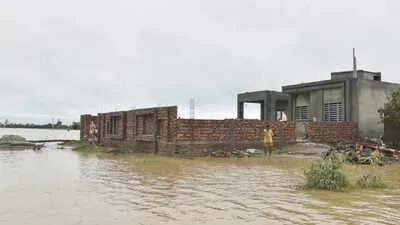
Punjab is witnessing its most severe floods in decades, leaving a trail of destruction across all 23 districts. At least 37 people have lost their lives, while thousands of families remain displaced as swollen rivers, breached embankments, and relentless rainfall wreak havoc on infrastructure and agriculture. The calamity has drawn comparisons to the catastrophic floods of 1988, underscoring the state’s vulnerability to extreme weather events. With fields inundated, roads washed away, and power supply disrupted in many areas, the disaster has sparked urgent calls for long-term flood management, improved disaster preparedness, and climate resilience measures.
Widespread Devastation Across Punjab
The floods have brought nearly every corner of Punjab to a standstill. From border districts along the Sutlej and Beas rivers to central regions dependent on agriculture, the impact has been uniformly grim. Homes have collapsed, crops submerged, and transportation networks crippled. Officials confirm that all 23 districts have been affected, making this one of the most geographically extensive disasters in the state’s history.
The death toll of 37 continues to rise as rescue workers retrieve bodies from submerged villages and damaged structures. Thousands have been shifted to relief camps where shortages of drinking water, food, and medical supplies pose additional challenges.
Agriculture and Economic Fallout
Punjab, known as India’s breadbasket, is experiencing massive losses to its kharif crops. Vast swathes of paddy fields are under water, raising concerns about reduced yields and food supply disruptions in the coming months. Farmers report damage to not only standing crops but also livestock, machinery, and storage facilities, compounding their financial burden.
Economists warn that the disaster could trigger losses running into hundreds of crores, particularly as Punjab’s agricultural economy is already under pressure from declining soil fertility and rising input costs. Restoring productivity will require both immediate compensation and long-term structural reforms in flood management.
Infrastructure Collapse and Relief Efforts
Key highways and village roads remain submerged or damaged, severing critical supply chains and hampering relief operations. Electricity outages have compounded distress in several regions, with waterlogging damaging transformers and power lines.
The state government, assisted by the National Disaster Response Force (NDRF) and Army units, has intensified evacuation and relief measures. Helicopters have been deployed for air-dropping food packets, while boats ferry stranded families from low-lying areas. Yet, residents in remote villages complain of delayed assistance, highlighting gaps in preparedness.
Climate Change and the Return of 1988 Memories
The disaster has revived painful memories of the floods of 1988, which left Punjab devastated for months. Experts argue that climate change has exacerbated the intensity of monsoons, making extreme floods more frequent and unpredictable. Poor urban planning, unchecked construction on floodplains, and inadequate drainage systems have further aggravated the crisis.
Environmentalists stress the need for structural reforms—ranging from strengthening embankments and river dredging to adopting sustainable water management practices. Without such systemic changes, Punjab risks reliving these disasters repeatedly in the years ahead.
Looking Ahead
While relief and rescue efforts continue, the broader challenge lies in rebuilding lives and restoring Punjab’s economic backbone. Compensation packages for affected families and farmers are being finalized, but the path to recovery will be arduous. The floods have once again exposed the fragility of Punjab’s infrastructure and the urgent need for climate-adaptive policies.
For millions who call the state home, the current crisis is more than a natural disaster—it is a warning about the future. Unless governance and planning rise to meet the scale of these challenges, the human and economic toll of such events will only deepen.
Comments