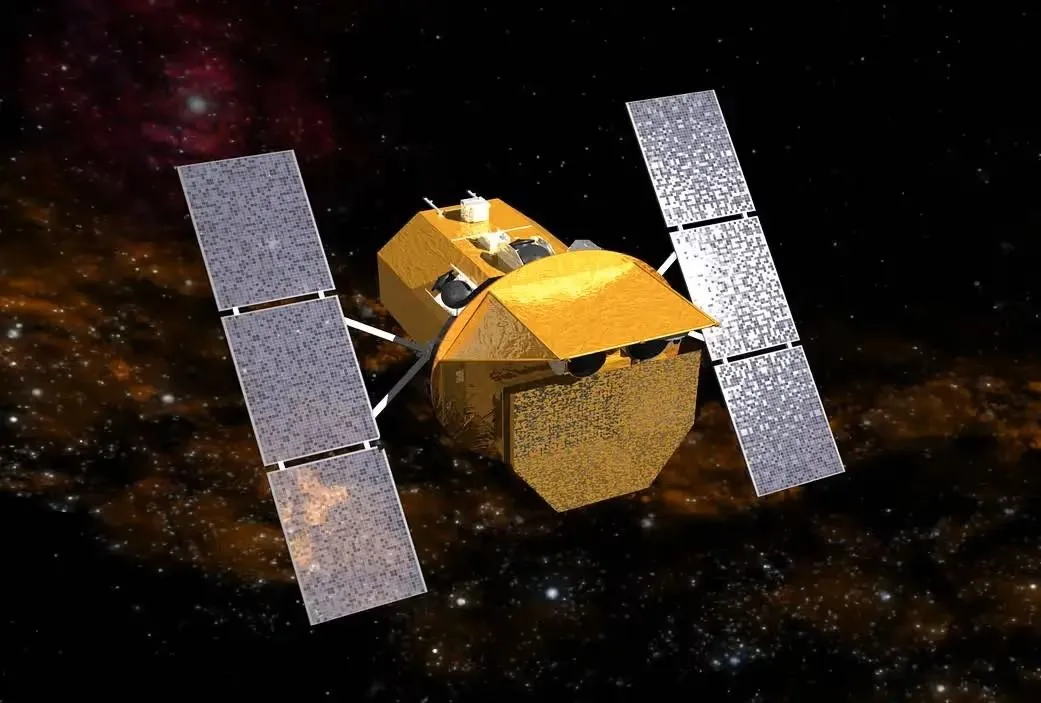
NASA has contracted Arizona-based startup Katalyst Space Technologies for $30 million to execute a groundbreaking mission aimed at extending the operational life of the Neil Gehrels Swift Observatory. Launched in 2004, the $500 million space telescope faces orbital decay and possible uncontrolled re-entry by late 2026. Katalyst’s mission will employ its “Link” spacecraft to rendezvous with the unprepared satellite and perform a pioneering orbital boost, marking the first commercial attempt to service a satellite not designed for in-orbit maintenance. This project underscores a major advancement in satellite servicing and space asset sustainability.
Swift Observatory Faces Imminent Risk
The Neil Gehrels Swift Observatory has been vital in studying gamma-ray bursts and high-energy cosmic phenomena. Despite its scientific contributions, the telescope lacks onboard propulsion to counter atmospheric drag, leading to orbital decay. NASA estimates a 90% probability of uncontrolled re-entry within two years, threatening to prematurely end its mission.
Katalyst Space’s Innovative Solution
Katalyst Space Technologies will deploy its robotic “Link” spacecraft to perform rendezvous and proximity operations (RPO) with the Swift Observatory. Using a specially designed robotic mechanism, the spacecraft will grip the satellite’s launch flanges—critical since Swift was not built with docking ports. The mission, planned for May 2026, will demonstrate the feasibility of servicing satellites without pre-existing maintenance provisions, potentially extending the life of high-value space assets and mitigating replacement costs.
Strategic Implications for Space Security
Beyond operational longevity, the mission carries strategic significance. The ability to conduct in-orbit satellite servicing enhances space resilience amid increasing concerns over the vulnerability of space infrastructure. Defense agencies are monitoring the operation closely, recognizing its potential to safeguard critical U.S. space assets while setting a benchmark for future commercial servicing endeavors.
Conclusion
NASA’s collaboration with Katalyst Space Technologies represents a landmark in satellite servicing, combining commercial innovation with strategic foresight. Successfully boosting the Swift Observatory’s orbit will extend its scientific mission and pave the way for future interventions to maintain and protect space-based infrastructure. As satellite constellations grow, such capabilities will become indispensable in sustaining operational and strategic interests in space.
Comments