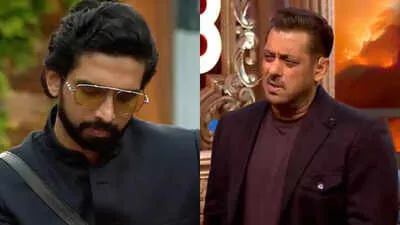
Bollywood has always been a stage not only for cinematic triumphs but also for personal and professional conflicts that shape industry narratives. Recently, Salman Khan revealed that he had not spoken to music composer Amaal Mallik for several years. The actor disclosed that the differences grew to such an extent that Mallik’s father, music director Daboo Malik, often found himself apologizing on his son’s behalf. This revelation sheds light on the fragile dynamics of interpersonal relationships in an industry where collaboration and respect are vital to longevity.
---
Salman Khan’s Statement
During an interaction, Khan candidly admitted that his relationship with Amaal Mallik had soured over the years. While avoiding sensationalism, he indicated that the composer’s behavior was a source of friction. The superstar pointed out that Daboo Malik, Amaal’s father, had personally reached out multiple times to make amends, apologizing for his son’s conduct.
Khan’s comments highlight an undercurrent often overlooked in the glamour of Bollywood—professional disagreements and personal egos can influence the creative process and, in some cases, stall potential collaborations.
---
The Family Dimension
What makes this revelation striking is the involvement of Daboo Malik, a respected figure in the music industry. His repeated apologies suggest that the conflict had persisted long enough to strain not only professional ties but also personal respect. The situation also underscores the generational gap in approach—while senior artists often emphasize humility and reconciliation, younger talents sometimes operate with a different set of values and priorities.
For Amaal Mallik, known for his contemporary compositions and youth-centric appeal, the disconnect with Salman Khan reflects how evolving creative identities can sometimes clash with established industry veterans.
---
Industry Dynamics and Power Equations
In Bollywood, relationships often hold as much weight as talent. For actors and composers alike, reputation and networks play a decisive role in career growth. A strained equation with a superstar of Khan’s stature can potentially limit professional opportunities, as big-budget films frequently depend on star-driven endorsements.
At the same time, Mallik’s independent success through digital platforms and his strong youth following highlight how new-generation artists are less reliant on traditional film channels. This duality reflects a shifting power equation within the industry, where established stars and young creators navigate complex terrain to protect their brand identities.
---
Lessons for the Industry
The Salman-Amaal rift serves as a reminder that professionalism and mutual respect are essential in sustaining collaborations in an industry fueled by partnerships. While artistic differences are natural, allowing them to escalate into personal rifts can have long-term repercussions. For audiences, such revelations offer a rare glimpse into the behind-the-scenes tensions that shape Bollywood’s creative ecosystem.
---
Conclusion
Salman Khan’s acknowledgment of his years-long silence with Amaal Mallik underscores the fragility of relationships in the entertainment business. While the superstar’s candor adds authenticity to the narrative, it also highlights the broader reality: in an industry where reputations travel fast and egos run high, reconciliation is as crucial as talent. Whether the two eventually mend their professional bond remains uncertain, but the episode has already sparked reflection on how generational differences and personal disagreements intersect with Bollywood’s collaborative fabric.
Comments