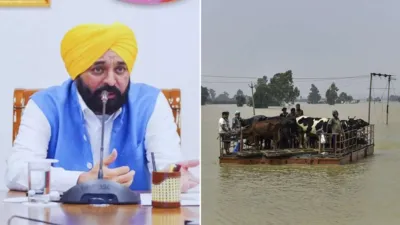
Punjab Chief Minister Bhagwant Mann has formally requested Prime Minister Narendra Modi to release Rs 60,000 crore in state funds to address the severe flooding affecting multiple districts. Torrential rains and overflowing rivers have caused widespread damage to infrastructure, agriculture, and residential areas, prompting the state government to declare extended school closures until September 3 for safety reasons. Authorities are prioritizing rescue operations, relief distribution, and rehabilitation measures. Analysts emphasize that timely central assistance is critical to mitigate economic losses, support affected communities, and expedite reconstruction. The situation highlights the urgent need for coordinated disaster management and climate-resilient infrastructure in flood-prone regions.
Flood Situation in Punjab
Recent heavy rainfall has triggered severe flooding across several districts, submerging roads, homes, and farmlands. Emergency response teams are actively conducting evacuations in high-risk areas, while state authorities are coordinating relief operations to provide food, shelter, and medical assistance. The scale of the damage has raised concerns about agricultural losses, with crops across major cultivable regions being particularly affected.
State Government’s Appeal to Centre
Chief Minister Mann has urged the central government to release Rs 60,000 crore in state funds to support flood relief and rehabilitation efforts. The funds are expected to aid infrastructure repair, restoration of public services, and compensation for affected households and farmers. Analysts note that swift release and deployment of these resources are critical to stabilizing the region’s economy and mitigating long-term social and financial impacts.
School Closures and Public Safety Measures
For precautionary reasons, schools in affected districts will remain closed until September 3. Authorities are emphasizing public safety, discouraging non-essential travel, and deploying additional resources for emergency response. Local administrations are coordinating with community organizations to ensure timely delivery of essential services and to prevent further casualties.
Economic and Infrastructure Implications
The floods have disrupted transportation, commerce, and power supply, underscoring the vulnerability of critical infrastructure to extreme weather events. Economic analysts suggest that rapid allocation of relief funds and targeted rehabilitation programs will be essential to restore normalcy. Investments in flood-resilient infrastructure, early warning systems, and climate-adaptive urban planning are expected to gain renewed focus in policy discussions following this crisis.
Conclusion
Punjab’s ongoing flood crisis highlights the urgent need for immediate relief, financial support, and long-term resilience planning. The Chief Minister’s appeal for Rs 60,000 crore underscores the scale of the disaster and the critical role of central-state collaboration in mitigating its effects. As authorities work to protect communities and restore essential services, the situation serves as a stark reminder of the increasing challenges posed by extreme weather events and the importance of proactive disaster management strategies.
Comments