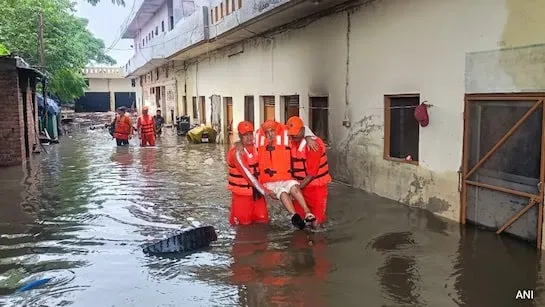
Punjab is reeling under the devastating impact of widespread floods that have already claimed 46 lives and left vast tracts of agricultural land submerged. Nearly 1.75 lakh hectares of farmland have been damaged, threatening the livelihoods of thousands of farmers in one of India’s most fertile states. The crisis has sparked concerns over food security, rural incomes, and state-level disaster preparedness. Authorities continue relief and rescue operations, while experts warn that recurring climate-linked disasters may pose long-term economic and social challenges for Punjab’s agrarian economy.
---
Human Toll and Immediate Impact
The state has reported 46 fatalities linked to the floods, with most deaths attributed to drowning, electrocution, and waterborne infections. Thousands of families have been displaced, their homes either destroyed or rendered uninhabitable. Relief camps have been established across affected districts, but overcrowding and limited resources are intensifying concerns about public health.
---
Agricultural Devastation
Punjab, widely recognized as India’s breadbasket, has seen catastrophic damage to crops across 1.75 lakh hectares of farmland. Paddy, cotton, and maize fields are under water, raising fears of a significant drop in seasonal yields. Farmers, already burdened by rising input costs and debts, face mounting uncertainty as prolonged waterlogging threatens soil fertility and delays future sowing cycles.
---
Economic Consequences
The destruction of farmland is expected to deal a blow not only to Punjab’s agrarian economy but also to the broader food supply chain in northern India. Agriculture accounts for a major share of the state’s economy, and a dip in production could push inflationary pressures in food markets. Experts caution that without immediate government intervention through compensation, subsidies, and credit relief, many small and marginal farmers may slip deeper into financial distress.
---
Government Response
The state government has intensified rescue and rehabilitation efforts, deploying disaster management teams, the National Disaster Response Force (NDRF), and local volunteers. Medical teams have been mobilized to control outbreaks of waterborne diseases, while compensation packages for affected families and farmers are under consideration. Officials have emphasized the need for long-term flood management strategies, including improved drainage infrastructure and climate-resilient agricultural practices.
---
Broader Climate Concerns
This year’s floods underscore the growing vulnerability of agrarian states like Punjab to extreme weather events, many of which are exacerbated by climate change. Erratic rainfall patterns, combined with inadequate urban and rural drainage, have made flood risks increasingly unmanageable. Environmentalists argue that large-scale infrastructural upgrades and sustainable land-use planning are crucial to preventing recurring agricultural crises.
---
Conclusion
The floods in Punjab serve as a grim reminder of the intersection between climate volatility, agricultural dependency, and socio-economic fragility. With 46 lives lost and crops devastated over 1.75 lakh hectares, the state faces a dual challenge: immediate humanitarian relief and long-term economic recovery. The response in the coming weeks will determine not only the resilience of Punjab’s farming community but also the state’s capacity to adapt to an era of unpredictable climate realities.
Comments