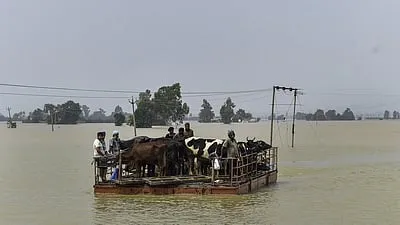
Punjab is reeling from one of its most severe flood crises in recent years, with over 1,000 villages inundated and more than 11,000 residents evacuated to safer grounds. Relentless rainfall and overflowing rivers have devastated farmland, homes, and infrastructure, creating widespread displacement and economic uncertainty. Relief operations are underway, with rescue teams, state agencies, and community volunteers working tirelessly to provide shelter, food, and medical aid. Beyond the immediate crisis, the disaster highlights critical challenges for Punjab’s agricultural economy, climate resilience, and long-term infrastructure planning, raising questions about preparedness in the face of increasingly volatile weather patterns.
---
Scale of the Crisis
Floodwaters have engulfed more than 1,000 villages across Punjab, displacing families and cutting off access to basic services. According to official figures, 11,330 individuals have been evacuated to relief camps as authorities intensify rescue operations. Roads and transport links remain disrupted, hampering the delivery of essential supplies. The destruction of homes has forced many families into temporary shelters, while fears of waterborne diseases add to the health risks already facing displaced populations.
---
Economic Consequences for Farmers
Punjab, India’s agricultural backbone, faces significant losses from the floods. Thousands of acres of standing crops have been submerged, threatening livelihoods in a state heavily dependent on farming income. Early assessments indicate that damages could run into hundreds of crores, with wheat, rice, and vegetable cultivation taking the heaviest toll. The losses are particularly concerning given that many farmers were already burdened by debt and rising input costs. Compensation packages will be crucial to stabilize rural households, but the challenge lies in ensuring timely and adequate support to mitigate long-term distress.
---
Relief and Rescue Operations
The state government, in coordination with disaster response teams, has deployed boats, medical units, and food supplies to flood-affected regions. Relief camps have been established to provide temporary shelter, while local communities and non-governmental organizations have stepped in to supplement official efforts. Despite progress in evacuation, the scale of damage requires sustained intervention. Emergency health units are monitoring the spread of disease, while relief distribution faces logistical challenges due to damaged infrastructure and high water levels.
---
Infrastructure and Preparedness Concerns
The floods have underscored Punjab’s vulnerability to climate extremes and its dependence on outdated infrastructure. Weak drainage systems, encroachment on riverbeds, and inadequate flood-prevention mechanisms have magnified the disaster’s impact. Experts argue that investment in resilient infrastructure, strengthened embankments, and sustainable water management is critical to reducing future risks. With climate change intensifying rainfall variability, Punjab must adapt its agricultural and urban planning strategies to minimize recurring losses.
---
A Call for Long-Term Strategy
While immediate relief remains the state’s priority, the floods highlight a deeper need for comprehensive disaster management. Short-term compensation can provide temporary relief, but without systemic reforms in water governance, agriculture, and infrastructure, Punjab’s vulnerability will persist. Building resilience through better forecasting systems, diversified crop patterns, and community-based disaster preparedness could help reduce the scale of future crises.
---
Conclusion
The flooding in Punjab is more than a natural disaster—it is a test of the state’s resilience and governance. As over 11,000 displaced citizens begin the slow process of rebuilding their lives, the crisis serves as a stark reminder that disaster preparedness and climate adaptation are no longer optional. They are central to securing Punjab’s future, both for its people and for the agricultural economy that sustains millions across the country.
Comments