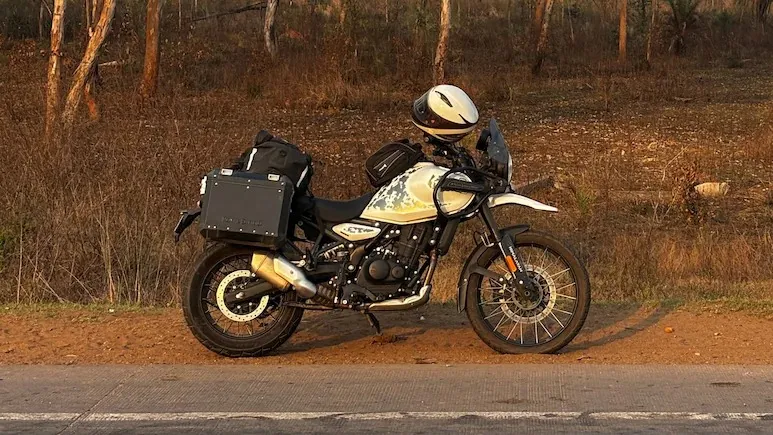
Royal Enfield, a prominent player in India's mid-capacity motorcycle segment, has urged the government to implement a uniform 18% Goods and Services Tax (GST) across all two-wheelers. This appeal comes ahead of the GST Council meeting scheduled for September 3–4, 2025, where discussions are expected to focus on restructuring the current four-tier GST system. Eicher Motors Executive Chairman Siddhartha Lal emphasized that a differential tax structure could undermine India's competitiveness in the global motorcycle market. He warned that imposing higher taxes on motorcycles above 350cc could shrink the domestic market and hinder investment in the mid-capacity segment. Lal highlighted that motorcycles over 350cc constitute only about 1% of India's two-wheeler market, and higher taxes on this segment would contribute negligible revenue while potentially damaging India's global standing in the industry.
Royal Enfield's Call for Uniform GST
Royal Enfield, a subsidiary of Eicher Motors, has been a significant contributor to India's success in the global two-wheeler market. The company has urged the government to adopt a uniform 18% GST rate across all two-wheelers, irrespective of engine capacity. This request aligns with the government's 'Make in India' initiative, aiming to bolster domestic manufacturing and global competitiveness. Lal's appeal underscores the importance of maintaining a consistent tax structure to support the industry's growth and international presence.
Potential Impact of Differential GST Rates
The GST Council's upcoming meeting is expected to discuss a proposal to simplify the existing four-tier GST system by reducing it to two slabs: 5% and 18%. Under this proposal, motorcycles below 350cc would attract an 18% GST, while those above 350cc might be subjected to a higher tax rate. Lal cautioned that such a differential tax structure could have adverse effects on the mid-capacity motorcycle segment. He argued that raising taxes on motorcycles above 350cc would not only reduce domestic demand but also limit the industry's ability to invest and expand globally. This could potentially open avenues for foreign competitors to dominate the mid-capacity market, undermining India's leadership in the segment.
Strategic Importance of the Mid-Capacity Segment
The mid-capacity motorcycle segment, particularly those above 350cc, has been instrumental in establishing India's prominence in the global two-wheeler market. These motorcycles serve as efficient and affordable alternatives to cars, offering benefits such as lower fuel consumption and reduced maintenance costs. Lal emphasized that these motorcycles are not luxury items but practical choices for consumers. Imposing higher taxes on this segment could not only dampen domestic demand but also hinder the industry's ability to compete effectively on the global stage.
Moneycontrol
Implications for India's Global Positioning
India has emerged as a global leader in the two-wheeler industry, with domestic brands setting benchmarks in technology, cost-efficiency, and distribution. Lal highlighted that a uniform 18% GST would not only secure India's current leadership but also enable the country to dominate the global electric two-wheeler market. Achieving scale in electric vehicles (EVs) would position India as the world's hub for next-generation mobility, fostering the growth of allied industries such as batteries, semiconductors, and advanced electronics. This comprehensive ecosystem would ensure India's global leadership for decades to come.
Comments