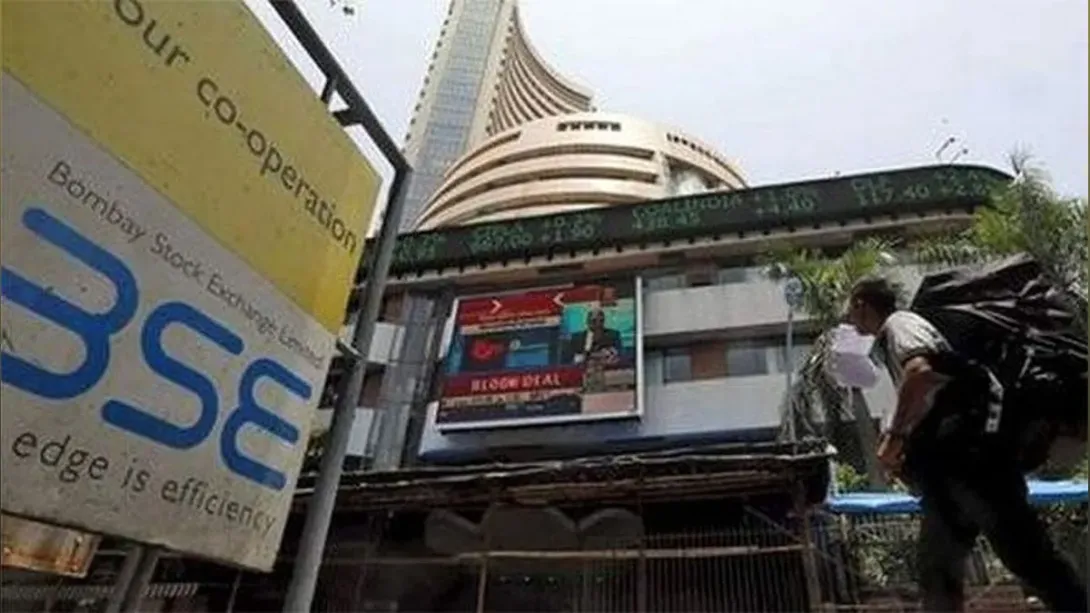
Indian equity benchmarks Sensex and Nifty declined sharply on Monday, as escalating geopolitical tensions in the Middle East following US airstrikes on Iranian nuclear facilities unsettled investors. The 30-share Sensex shed 511.38 points to close at 81,896.79, after plunging over 900 points intra-day. The NSE Nifty fell 140.50 points to 24,971.90. The strikes disrupted earlier market hopes of easing regional conflicts, driving crude oil prices higher and prompting risk aversion. Despite the volatile environment, selective sectoral gains provided partial recovery. Globally, markets exhibited mixed responses to the crisis, reflecting widespread uncertainty.
Market Decline Amid Rising Middle East Tensions
The Indian stock market opened the week on a cautious note as geopolitical developments sharply impacted investor sentiment. Following the US airstrikes on three critical nuclear sites in Iran—Fordow, Natanz, and Isfahan—both the Sensex and Nifty retreated significantly. The Sensex, which plunged as much as 931.41 points or 1.13 percent intraday, eventually settled with a loss of 511.38 points, or 0.62 percent, closing at 81,896.79. The NSE Nifty dropped 140.50 points, or 0.56 percent, to finish at 24,971.90.
These developments marked a sudden reversal from optimism seen last Friday, when markets rallied anticipating a potential de-escalation in the Israel-Iran conflict. The US military action abruptly altered that narrative, reigniting fears of prolonged regional instability and supply disruptions in the global oil market.
Sectoral Performance and Stock Movements
Among Sensex constituents, prominent technology and industrial stocks bore the brunt of the sell-off. HCL Technologies, Infosys, Larsen & Toubro, Mahindra & Mahindra, Hindustan Unilever, ITC, Tata Consultancy Services, and Maruti Suzuki were notable laggards, reflecting investors’ retreat from cyclical and export-oriented sectors amid geopolitical uncertainty.
Conversely, select stocks including Trent, Bharat Electronics, Bajaj Finance, and Kotak Mahindra Bank managed to post gains, offering some respite. The uptick in defence-related Bharat Electronics and resilient financial stocks underscored investor interest in defensive and growth sectors amid volatility.
Global Market Response and Oil Price Surge
The fallout from the US strikes reverberated across global markets. Asian indices showed mixed results, with South Korea’s Kospi and Japan’s Nikkei 225 closing lower, while China’s SSE Composite and Hong Kong’s Hang Seng edged higher. European markets traded in negative territory during mid-session. US markets had ended mostly lower in the previous session, mirroring a cautious global mood.
Brent crude oil prices rose by 0.49 percent to USD 77.39 a barrel, reflecting concerns over possible supply disruptions in the oil-rich Middle East region. The spike in crude prices added pressure on equity markets already jittery over geopolitical risks.
Expert Insight: Navigating Volatility Amid Uncertainty
Vinod Nair, Head of Research at Geojit Investments Limited, explained, “Markets had built up expectations of easing tensions in the Middle East following the US’s earlier indication of a two-week deliberation period. The unexpected strikes, however, reversed that optimism, triggering crude price hikes and volatility in domestic equities.” He further noted that the market recovery during the day was aided by gains in capital goods and metals sectors, as fears of an immediate disruption to oil supplies appeared contained.
Foreign Institutional Investor Activity and Recent Market Trends
Despite Monday’s turbulence, Foreign Institutional Investors (FIIs) have continued to exhibit strong interest in Indian equities. Exchange data revealed net FII purchases of Rs 7,940.70 crore on Friday, reflecting sustained foreign capital inflows.
Last Friday’s robust market performance saw the Sensex surge 1,046.30 points (1.29 percent) to 82,408.17, while the Nifty advanced 319.15 points (1.29 percent) to close at 25,112.40. The sharp contrast between last week’s gains and Monday’s losses highlights the prevailing volatility as investors recalibrate amid evolving geopolitical dynamics.
Outlook: Balancing Risk and Opportunity in Uncertain Times
As the geopolitical situation unfolds, market participants remain vigilant to the potential ramifications for global trade, energy supplies, and investor confidence. While immediate oil supply shocks appear limited, the risk premium priced into equities is likely to persist.
Indian markets are expected to navigate these challenges with a focus on sectoral rotation and selective stock picking. Defensive sectors and companies with strong fundamentals may outperform amid ongoing uncertainty, while volatility could present tactical buying opportunities for long-term investors.
Comments