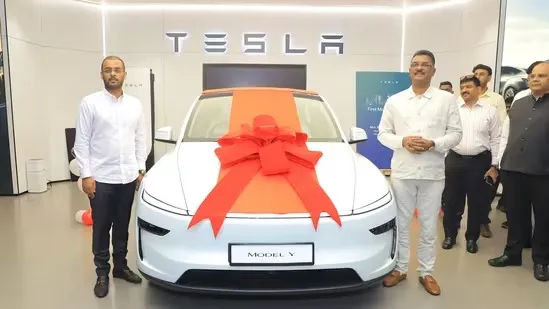
Tesla has officially delivered its first Model Y in India, with Shiv Sena MLA Pratap Sarnaik becoming the country’s first recipient. The event marks a significant milestone for both Tesla and India’s electric mobility sector, signaling the American automaker’s long-awaited entry into one of the world’s fastest-growing EV markets. With a price tag of around Rs. 70 lakh, the Model Y targets the premium SUV segment and is expected to appeal to India’s affluent urban buyers. Analysts view this as a symbolic beginning for Tesla’s Indian journey, with broader implications for EV adoption and domestic competition.
Tesla’s Strategic Foray into India
After years of speculation, negotiations, and regulatory discussions, Tesla has finally put its wheels on Indian soil. The delivery of the Model Y is more than a ceremonial handover—it represents the company’s strategic intent to penetrate India’s luxury EV segment while simultaneously gauging demand and consumer sentiment. This move comes at a time when India is aggressively pushing for cleaner mobility solutions under its FAME and PLI schemes.
The Significance of the Model Y
The Model Y, a globally successful mid-size electric SUV, offers Tesla’s signature minimalist design, cutting-edge software features, and strong performance metrics. In India, the vehicle is priced at approximately Rs. 70 lakh, positioning it in direct competition with high-end electric SUVs from Mercedes-Benz, BMW, and Audi. Its appeal lies in Tesla’s strong global brand equity and unique selling propositions such as over-the-air updates, autonomous driving capabilities, and an extensive digital ecosystem.
Implications for India’s EV Market
Tesla’s entry is likely to reshape consumer expectations in India’s premium EV space. While affordability and charging infrastructure remain challenges, Tesla’s presence is expected to stimulate faster infrastructure rollout and intensify competition among automakers. Domestic players like Tata Motors and Mahindra, along with global rivals, may face increased pressure to enhance their offerings. For policymakers, Tesla’s arrival reinforces the urgency of creating a robust ecosystem of charging networks, renewable energy integration, and supply chain resilience.
Looking Ahead
Although this initial delivery is symbolic, Tesla’s larger strategy for India is expected to involve local assembly or manufacturing to bring down costs and qualify for government incentives. If executed, this could significantly boost India’s EV adoption rates and establish the country as a crucial node in Tesla’s global supply chain. For now, the delivery to Pratap Sarnaik sets the stage for Tesla’s long-term play in India’s mobility future.
Comments