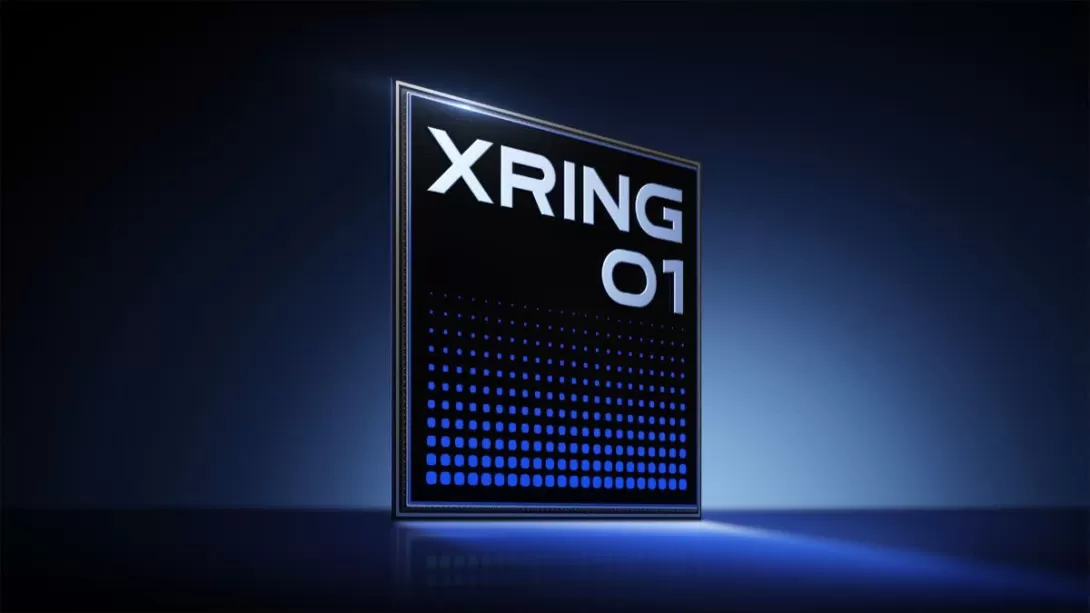
Xiaomi has taken a historic leap in the global tech race by launching its first homegrown flagship processor, the XRING O1, alongside a suite of advanced consumer devices in China. The announcement, which included the debut of the Xiaomi 15S Pro smartphone and Pad 7 Ultra tablet—both powered by the XRING O1—signals a dramatic shift in Xiaomi’s long-term strategy toward technological independence. The company also unveiled another indigenous chip, XRING T1, designed for smart wearables, highlighting a broader ambition to reduce reliance on foreign semiconductor suppliers and cement its place as a serious player in next-generation consumer electronics.
Xiaomi Asserts Technological Sovereignty with XRING O1
Xiaomi’s introduction of the XRING O1 marks a pivotal moment for the Chinese tech giant, as it enters the elite circle of global manufacturers capable of designing high-performance processors in-house. Fabricated using TSMC’s second-generation N3E 3nm process and housing an impressive 19 billion transistors, the XRING O1 is a tour de force of modern silicon engineering.
The chip features a 10-core CPU architecture comprised of two Cortex-X925 prime cores clocked at 3.9GHz, six Cortex-A725 performance cores ranging from 1.9GHz to 3.4GHz, and two Cortex-A520 efficiency cores at 1.8GHz. This configuration is paired with a 16-core ARM Immortalis-G925 GPU, optimized for rendering-intensive tasks, and a six-core neural processing unit (NPU) rated at 44 TOPS—underscoring its AI processing prowess.
Benchmark results place the XRING O1 ahead of formidable rivals. On AnTuTu, it surpassed 3 million points, outpacing Qualcomm’s Snapdragon 8 Elite. In Geekbench 6, it achieved 3,000 points in single-core and 9,000 in multi-core performance—narrowly beating Apple’s A18 Pro.
The chip’s power efficiency is enhanced by a redesigned thermal architecture that increases heat dissipation by 30%, a quartet of dynamic low-power modes, and a dedicated microcontroller for energy optimization. It also supports cutting-edge specifications such as LPDDR5T RAM, UFS 4.1 storage, USB 3.2 Gen 2, Wi-Fi 7, and a proprietary 3-core image signal processor (ISP).
XRING T1: Xiaomi Expands Chip Portfolio to Wearables
Complementing the XRING O1, Xiaomi also launched the XRING T1, a chipset tailor-made for smartwatches. Designed with a focus on cellular connectivity and power efficiency, the T1 offers support for eSIM functionality and claims a 35% boost in 4G performance over market competitors.
Its energy-saving design extends battery life for both voice and data transmission—an essential feature for wearables. Furthermore, it enables features like customizable watch faces, remote camera preview, and standalone control of Xiaomi smart vehicles without a paired smartphone. The XRING T1 is set to debut in the Xiaomi Watch S4 15th Anniversary Edition, further expanding Xiaomi’s vertically integrated product lineup.
Xiaomi 15S Pro: Flagship Phone Powered by Homegrown Silicon
The Xiaomi 15S Pro exemplifies the company’s hardware ambitions, marrying elegant design with in-house performance. Encased in an aerospace-grade aluminium frame and topped with a symmetrical micro-curved display, the device stands out with a ceramic “volcano-shaped” camera deco and gold-accented power button.
Under the hood, the smartphone is powered by the XRING O1 chipset and features a Leica-engineered Summilux triple-lens system with an f/1.44 aperture—ideal for low-light photography. The phone runs HyperOS 2 and includes both Surge G1 and Surge P3 chips for battery management and fast charging. It is priced at RMB 5,499 (approximately Rs. 65,000) and is available in Xiaomi Composite Fiber and Sky Blue finishes.
Pad 7 Ultra: Premium Tablet with Proprietary Power
Xiaomi’s push for ecosystem uniformity extends to the tablet segment with the Pad 7 Ultra, also driven by the XRING O1 processor. Positioned as a high-performance multimedia and productivity device, the tablet boasts competitive specifications and comes in Misty Purple and Classic Black. Priced from RMB 5,699 (about Rs. 67,000), it aligns with Xiaomi’s strategy to standardize performance across devices using in-house technology.
A Strategic Shift Toward Semiconductor Independence
These launches underscore a broader industry trend: vertical integration as a hedge against global supply chain vulnerabilities and geopolitical risk. By investing heavily in its own chip design capabilities, Xiaomi joins the ranks of tech giants like Apple, Samsung, and Huawei—each seeking autonomy from third-party chipmakers.
The implications are significant. Not only does this reduce Xiaomi’s dependence on international vendors, but it also enhances its control over hardware-software optimization, potentially delivering better device performance and user experience. As the global semiconductor arms race intensifies, Xiaomi’s move signals its readiness to play a more assertive role in shaping the next era of consumer technology.
Conclusion: A Defining Moment for Xiaomi
With the unveiling of the XRING O1 and XRING T1, Xiaomi has not only flexed its engineering capabilities but also outlined a future in which it controls more of its technological destiny. These advances position the company as a credible competitor not just in smartphones and tablets, but in semiconductors—a sector long dominated by a handful of global players.
For investors, consumers, and competitors, one thing is clear: Xiaomi is no longer merely a fast follower in the tech space. It is a frontrunner determined to define its own narrative—and perhaps, in time, the industry’s as well.
Comments