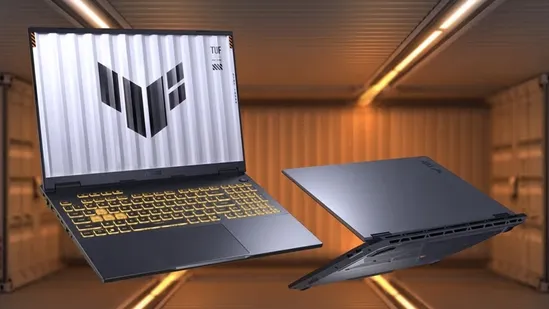
ASUS has introduced its 2025 range of TUF and ROG gaming laptops in the Indian market, targeting gamers, creative professionals, and performance-focused users. The lineup features the TUF Gaming F16 and A16, ROG Strix G16, and Zephyrus G14—each equipped with cutting-edge NVIDIA GeForce RTX 50-series GPUs and the latest Intel and AMD processors. With pricing starting at Rs. 1,44,990 and reaching up to Rs. 1,84,990, these models promise enhanced graphics, high refresh rate displays, and robust build quality. The launch reaffirms ASUS’s commitment to high-performance computing across diverse user segments in India.
TUF and ROG Series: Reinforcing ASUS's Gaming Dominance
ASUS continues to strengthen its foothold in India’s premium laptop segment with the 2025 refresh of its TUF and ROG lines. The new offerings cater to a spectrum of users—from entry-level gamers to creative professionals—delivering superior computing power, graphics performance, and display technology.
Pricing and Market Availability
The newly launched devices are now available for purchase both online and through authorized retail partners across India. Here's a look at the pricing structure:
- TUF Gaming F16 – Starting at Rs. 1,44,990
- TUF Gaming A16 – Starting at Rs. 1,69,990
- ROG Strix G16 – Starting at Rs. 1,69,990
- Zephyrus G14 – Starting at Rs. 1,84,990
ASUS’s pricing strategy positions these machines competitively in India’s expanding gaming and content creation market.
TUF Gaming F16: Rugged Performance for Entry-Level Gamers
The TUF Gaming F16 is tailored for users seeking reliable entry-level gaming performance. Key specifications include:
- Processor: Intel Core i7-14650HX
- GPU: NVIDIA GeForce RTX 5070
- Display: 16-inch 2.5K IPS, 165Hz refresh rate
- Memory & Storage: Up to 32GB DDR5 RAM, 1TB Gen5 SSD
- Build: Durable chassis, RGB backlit keyboard
Designed with ASUS’s military-grade durability standards, the F16 blends style and functionality with performance.
TUF Gaming A16: AMD-Powered Alternative with Identical Build
Sharing its external design with the F16, the TUF Gaming A16 swaps Intel’s silicon for AMD’s powerhouse Ryzen chips. Notable features include:
- Processor: Up to AMD Ryzen 9 8940HX
- GPU: NVIDIA GeForce RTX 5070
- Display: 16-inch 2.5K IPS, 165Hz refresh rate
- Memory & Storage: 16GB DDR5 RAM (expandable), 1TB PCIe Gen4 SSD
This variant appeals to AMD loyalists seeking strong multi-core performance and upgradability.
ROG Strix G16: High-End Gaming with Desktop-Class Specs
Built for gaming enthusiasts, the ROG Strix G16 steps up with best-in-class performance and visual experience:
- Processor: Intel Core Ultra 9 275HX
- GPU: NVIDIA GeForce RTX 5070
- Display: 16-inch 2.5K IPS, 240Hz refresh rate, 100% DCI-P3, 500 nits
- Aesthetics: Per-key RGB lighting, bold ROG styling
The G16 is engineered for AAA gaming titles, offering rapid response times and immersive visuals—an ideal pick for competitive players.
Zephyrus G14: A Compact Powerhouse for Creators
Targeted at professionals who require color accuracy and portability without compromising power, the ROG Zephyrus G14 delivers:
- Processor: AMD Ryzen 9 2700
- GPU: NVIDIA GeForce RTX 5060
- Display: 14-inch 3K OLED panel
- Design: Sleek and lightweight, creator-focused aesthetics
With its high-resolution OLED screen and creator-friendly specs, the Zephyrus G14 stands out as a top-tier laptop for digital artists, video editors, and professionals on the move.
Final Thoughts: Elevating the Indian Gaming and Creator Ecosystem
The ASUS 2025 lineup clearly reflects the brand’s intent to stay ahead in the fast-evolving Indian tech landscape. By integrating next-gen NVIDIA RTX 50-series GPUs and top-tier Intel and AMD processors, ASUS ensures its devices are future-ready for gaming, content creation, and high-performance workflows.
These laptops not only cater to the demands of advanced users but also highlight ASUS’s agility in adapting global innovations for the Indian market. With growing interest in gaming and digital content creation, this move positions ASUS as a frontrunner in the premium computing segment.
Comments