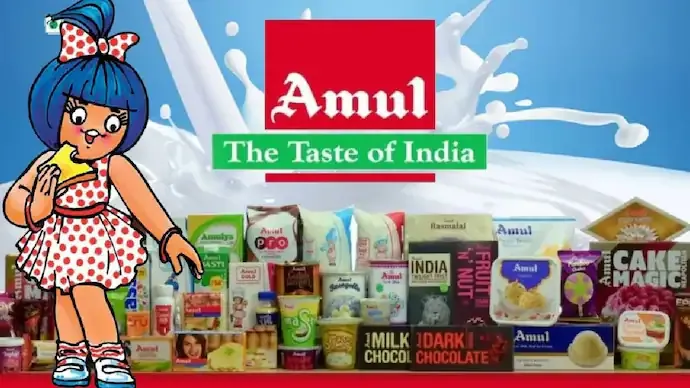
India’s largest dairy cooperative, Amul, has announced a sweeping reduction in the prices of over 700 products following the government’s recent decision to lower Goods and Services Tax (GST) rates on essential food items. This move is expected to bring financial relief to millions of consumers while strengthening Amul’s competitive positioning in the rapidly evolving dairy market. The company has stated that the revised pricing will immediately reflect in its product portfolio, including milk, cheese, butter, and other popular dairy categories. Analysts predict the decision will stimulate demand and boost overall market consumption.
A Strategic Move to Pass on GST Benefits
Amul’s decision comes directly in response to the central government’s revision of GST slabs, aimed at easing inflationary pressures on household staples. By cutting prices, Amul is transferring the tax benefit to its vast consumer base rather than absorbing it internally.
The revised prices, effective immediately, cover a wide range of products, from packaged milk and yogurt to premium cheese and ice cream. According to industry estimates, this reduction could lead to savings of Rs. 2 to Rs. 10 per unit, depending on the product category and packaging size.
This step aligns with the company’s longstanding policy of maintaining affordability while ensuring farmer welfare, as Amul sources milk directly from millions of dairy farmers across India.
Consumer Impact and Market Dynamics
The announcement has been well-received by consumers, especially at a time when food inflation has placed pressure on household budgets. The GST reduction and subsequent price drop are likely to stimulate demand in both urban and rural markets.
Market experts note that Amul’s aggressive pricing strategy could prompt competitors to follow suit, potentially leading to a sector-wide price adjustment. With dairy products constituting a significant portion of everyday consumption, the overall impact on consumer spending patterns could be substantial.
Retailers have also been instructed to ensure that new pricing is clearly displayed, avoiding discrepancies between billing and shelf prices.
Broader Economic Context
This development comes against the backdrop of slowing rural demand and rising operational costs within the fast-moving consumer goods (FMCG) sector. By reducing prices, Amul not only strengthens its market dominance but also reinforces its role as a consumer-centric brand.
Economists suggest that such tax-driven price corrections can play a vital role in boosting consumption, which, in turn, supports economic growth. Furthermore, the move may help stabilize demand for dairy products during the upcoming festive season, when consumption typically surges.
Industry Outlook
Amul’s pricing strategy is likely to have a ripple effect throughout the FMCG sector, encouraging companies to reassess their own pricing models in light of revised tax rates. With over Rs. 72,000 crore in annual turnover, Amul’s actions carry significant weight in shaping industry norms.
The combination of lower GST and competitive pricing may also incentivize consumers to shift towards branded dairy products, accelerating the formalization of India’s dairy industry.
Conclusion
Amul’s decision to cut prices on more than 700 products represents a calculated move to align with government reforms while strengthening consumer trust. By directly passing on the benefits of reduced GST rates, the company has set a benchmark for transparency and customer-centric practices.
As India’s dairy sector braces for intensified competition, this bold step positions Amul at the forefront of an evolving marketplace where affordability, quality, and accessibility will define the future of consumer engagement.
Comments